
Hotel Carpet Installation Process: A Complete Guide for Hospitality Projects
Carpet is one of the most important flooring materials used in hotels today. From luxurious lobbies and guest rooms to conference halls and corridors, hotel carpets contribute significantly to comfort, aesthetics, noise reduction, and overall guest experience.
However, even the highest-quality hotel carpet can fail to deliver its full value if it is not installed correctly. A professional carpet installation process ensures durability, safety, seamless appearance, and long-term performance.
In this guide, we will walk through the complete hotel carpet installation process and explain why proper installation is critical for hospitality projects.
Why Proper Hotel Carpet Installation Matters
Hotel carpets endure constant foot traffic from guests, staff, and service equipment. Poor installation can lead to wrinkles, loose seams, edge lifting, premature wear, and costly maintenance issues.
Professional installation offers several benefits:
- Extended carpet lifespan
- Improved guest safety
- Better acoustic performance
- Enhanced visual appearance
- Reduced maintenance costs
- Higher return on investment
For luxury hotels and commercial hospitality projects, installation quality is just as important as carpet quality.
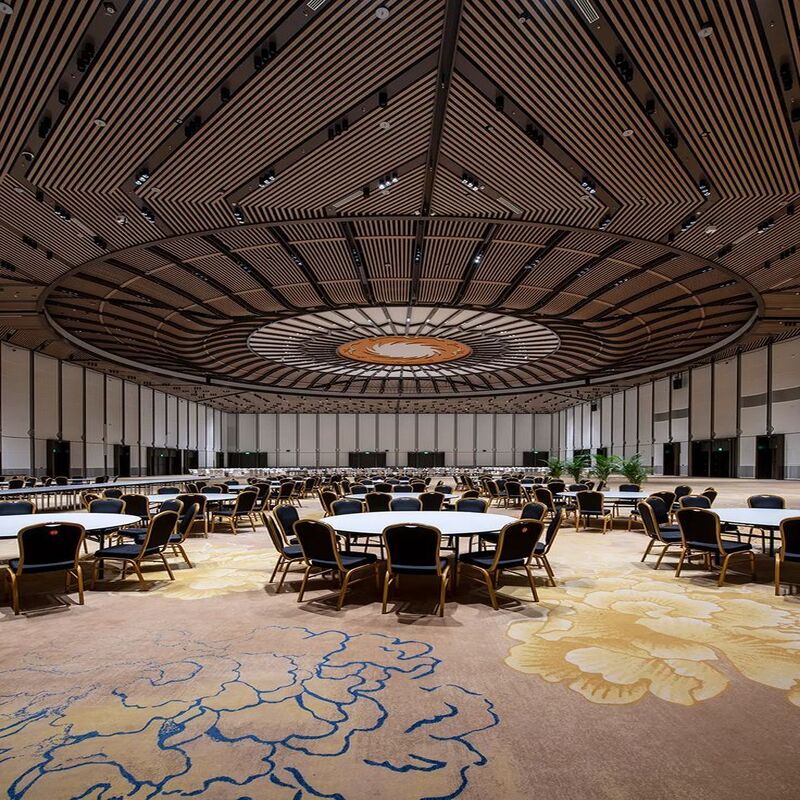
Step 1: Subfloor Preparation
Every successful hotel carpet installation begins with proper subfloor preparation.
The most common subfloor is concrete, although wood and other flooring systems may also be used. Before installation, the subfloor must meet the following requirements:
- Smooth and level surface
- Clean and dust-free condition
- No oil, grease, or contaminants
- Moisture content below industry standards
- Surface variation no greater than acceptable tolerances
If oil stains or contaminants are present, they should be removed using appropriate cleaning agents before installation begins.
A properly prepared subfloor provides a stable foundation and helps prevent future installation problems.
Step 2: Layout Planning and Marking
Before cutting the carpet, installers must carefully review project drawings and room layouts.
Accurate measurements ensure:
- Proper pattern alignment
- Minimal material waste
- Symmetrical installation
- Consistent visual appearance
Center lines and reference points should be marked according to the project design to achieve precise carpet positioning throughout the hotel.
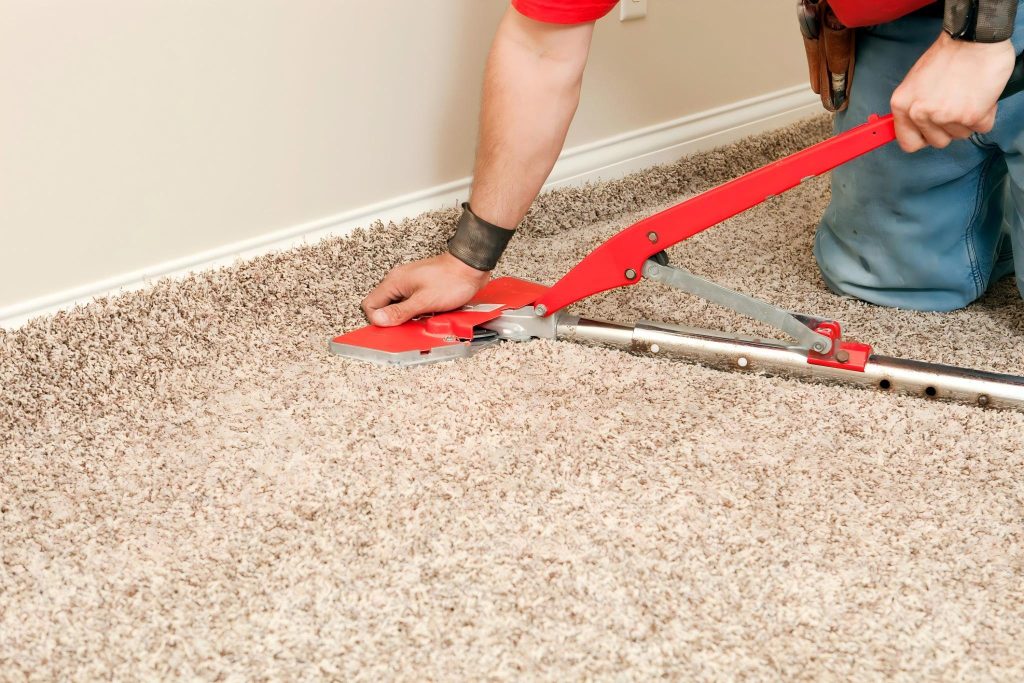
Step 3: Carpet Measuring and Cutting
Professional carpet cutting requires careful planning.
Each room should be measured individually, and carpet rolls should be labeled according to their installation location.
The carpet is typically cut slightly larger than the room dimensions to allow for stretching and trimming during installation.
For large hotel lobbies, banquet halls, and public spaces, carpet sections are often cut and seamed on-site to ensure a perfect fit.
Step 4: Installing Tack Strips
Tack strips are commonly used in stretched carpet installations.
These strips are installed around the perimeter of the room and secured to the subfloor using concrete nails or appropriate fasteners.
Typically, tack strips are positioned approximately 8–10 mm away from the skirting board to allow the carpet edge to be tucked neatly underneath.
Proper tack strip installation is essential for maintaining carpet tension and preventing movement over time.
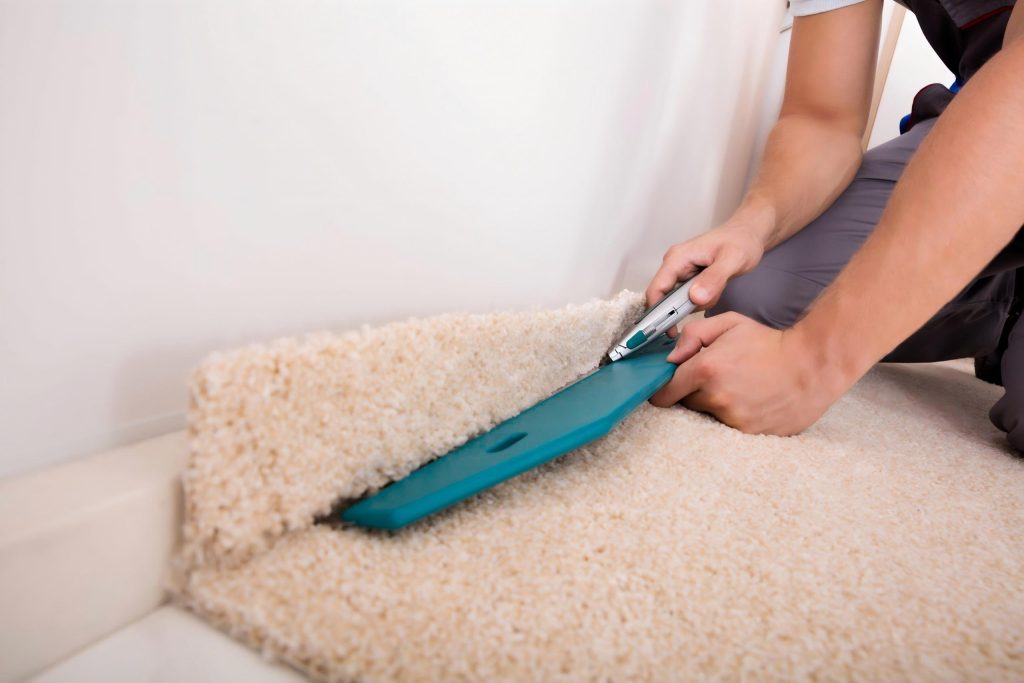
Step 5: Installing Carpet Underlay
Carpet underlay, also known as carpet padding, enhances comfort and extends carpet life.
The underlay is installed close to the tack strips and secured using adhesive.
Benefits of quality underlay include:
- Improved walking comfort
- Better sound absorption
- Enhanced thermal insulation
- Reduced carpet wear
- Increased carpet lifespan
For premium hotel environments, underlay plays an important role in delivering a luxury guest experience.
Step 6: Carpet Installation and Seaming
Carpet Seaming
In large hotel spaces, multiple carpet sections must often be joined together.
Professional installers use seam tape and adhesives to create nearly invisible seams. Carpet fibers along the seam are carefully blended to ensure a smooth and consistent appearance.
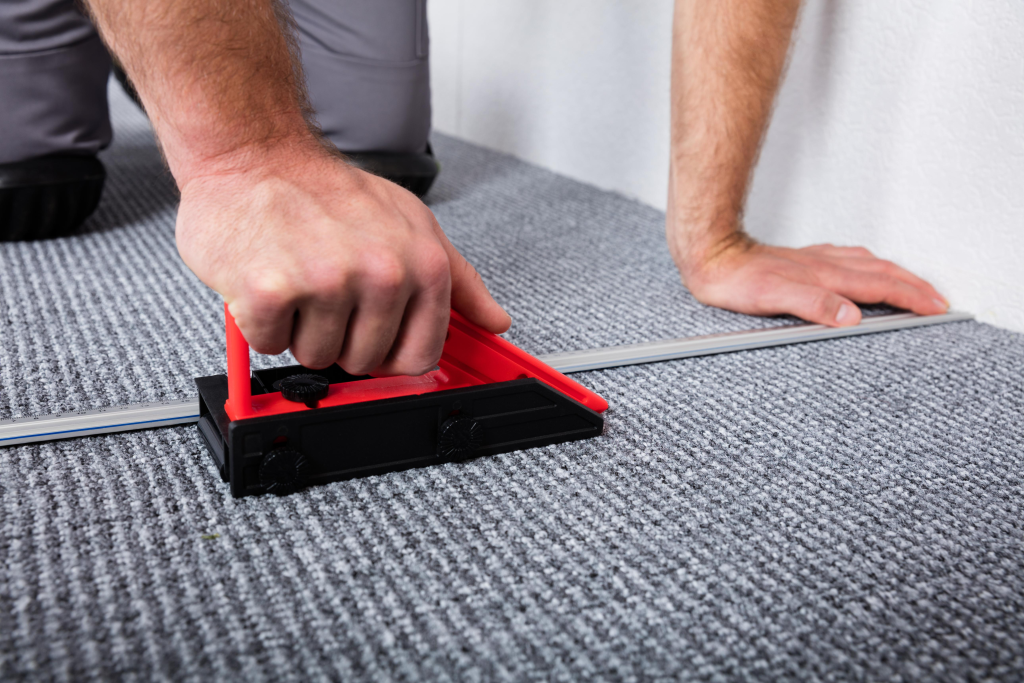
Carpet Stretching and Fixing
After positioning the carpet, installers secure one side to the tack strips and use specialized carpet stretching tools to eliminate wrinkles and tension issues.
The carpet is stretched gradually in multiple directions until it lies perfectly flat.
Excess material is then trimmed, and edges are tucked neatly beneath skirting boards or transition profiles.
Step 7: Adhesive Installation Method
For certain commercial applications, direct glue-down installation may be preferred.
This method is commonly used for:
- Synthetic hotel carpets
- Corridors
- Conference centers
- High-traffic public areas
The adhesive is applied directly to the prepared subfloor before the carpet is laid and rolled into position.
Hotels often choose full-spread adhesive installation in public areas because it provides maximum stability under heavy foot traffic.
Step 8: Finishing Details and Final Inspection
The final stage focuses on details that influence both appearance and performance.
Installers carefully finish:
- Door thresholds
- Carpet transitions
- Skirting board edges
- Corner details
- Seam inspection
After installation is complete, the entire carpeted area should be vacuumed thoroughly to remove loose fibers, dust, and installation debris.
A final quality inspection ensures the carpet is smooth, secure, and ready for guest use.
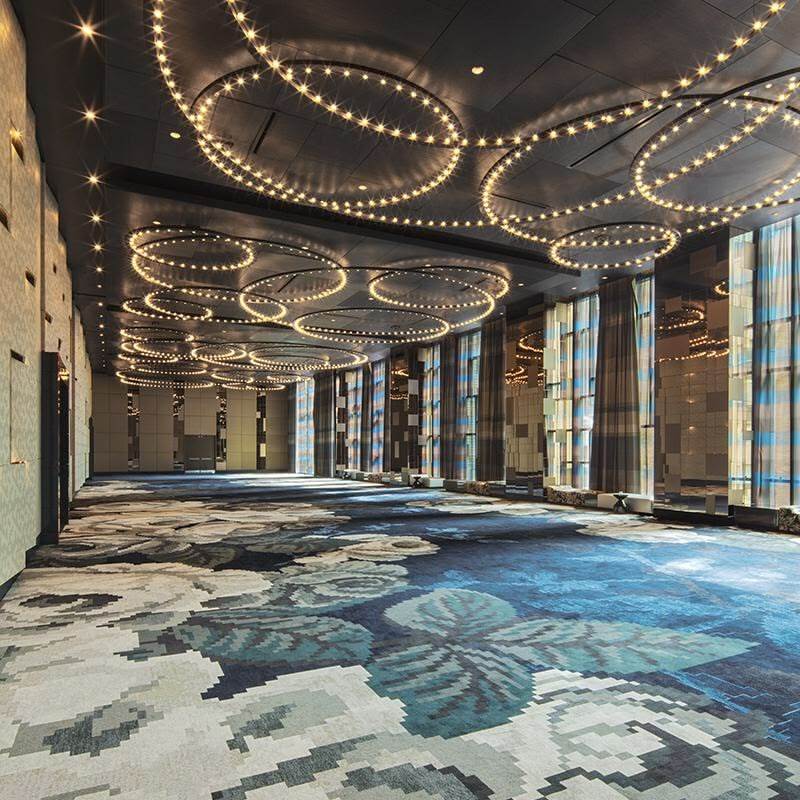
Best Practices for Long-Term Performance
To protect newly installed hotel carpets:
- Avoid heavy traffic immediately after installation.
- Allow adhesives sufficient curing time.
- Maintain regular vacuuming schedules.
- Address spills and stains promptly.
- Conduct periodic professional deep cleaning.
Proper maintenance significantly extends the service life of hotel carpets and helps preserve their original appearance.
Conclusion
Hotel carpet installation is a highly specialized process that directly affects the appearance, durability, and functionality of hospitality interiors. From subfloor preparation and precise cutting to stretching, seaming, and finishing, every step contributes to the overall success of the project.
Whether you are designing a luxury hotel lobby, guest room, conference center, or resort property, investing in professional carpet installation ensures long-lasting performance and an exceptional guest experience.
Partnering with an experienced hotel carpet manufacturer and installation team can help your hospitality project achieve the perfect balance of elegance, comfort, and durability.