
Carpet Installation Requirements: A Complete Guide for Commercial and Hospitality Projects
Carpet installation is more than simply laying flooring on a surface. Whether for hotels, offices, conference centers, luxury clubs, or commercial buildings, proper carpet installation directly impacts appearance, durability, safety, and long-term performance.
Even premium-quality carpets can suffer from wrinkles, loose seams, edge lifting, and premature wear if installation standards are not followed. Therefore, understanding carpet installation requirements is essential for architects, contractors, project managers, and property owners.
In this guide, we explore the key requirements, installation control points, and inspection standards for professional carpet installation projects.
Basic Requirements Before Carpet Installation
Successful carpet installation begins with proper site preparation.
Before installation starts, the following conditions should be met:
1. Subfloor Must Be Flat and Stable
The substrate should be:
- Smooth and level
- Free from cracks and hollow spots
- Dust-free and clean
- Free from loose particles and debris
- Structurally sound with adequate strength
An uneven subfloor can affect carpet appearance and shorten its service life.
2. Other Construction Work Should Be Completed
To avoid damage during installation, the following work should be finished beforehand:
- Ceiling installation
- Wall finishing
- Door and window installation
- Electrical and mechanical systems
- Fixed furniture and equipment
The installation area should provide an enclosed and controlled working environment.
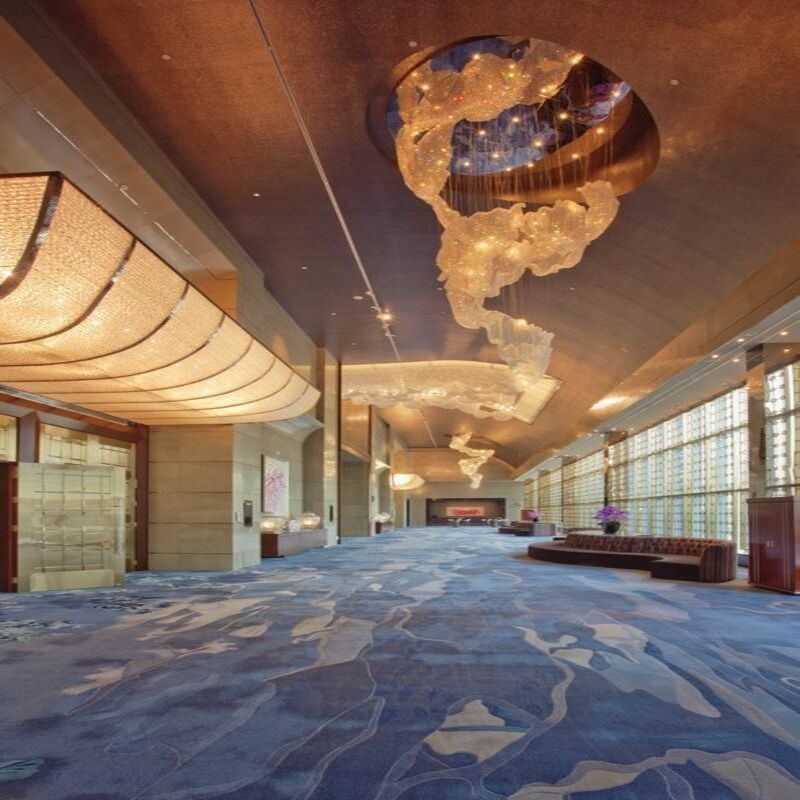
Key Carpet Installation Control Points
Professional installers follow strict procedures to ensure the best results.
Avoid Moisture Problems
Carpets should never be installed on wet surfaces or in areas affected by groundwater infiltration.
For concrete floors, moisture content should generally remain below 8% before installation.
Excess moisture can cause adhesive failure, mold growth, and carpet deformation.
Accurate Site Measurement
Before installation, all rooms should be carefully measured.
Special attention should be given to:
- Room dimensions
- Wall alignment
- Corner angles
- Doorway locations
- Floor outlets and access panels
Accurate measurements help reduce waste and ensure a precise fit.
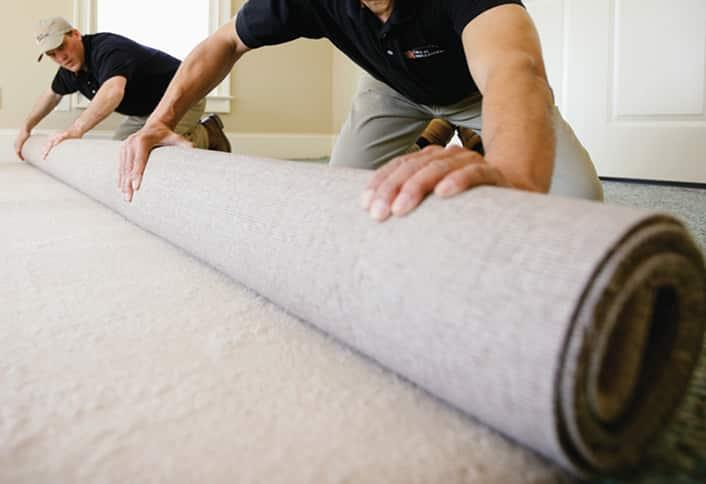
Carpet Planning and Numbering
For large projects such as hotels and office buildings, carpet rolls should be pre-arranged, numbered, and matched according to layout plans.
This process ensures:
- Consistent color appearance
- Proper pattern matching
- Correct installation sequence
- Reduced installation errors
Skirting Board Clearance
The gap between the skirting board and floor should be determined according to carpet thickness.
Typically, approximately 8 mm of clearance is reserved to allow carpet edges to be neatly tucked underneath.
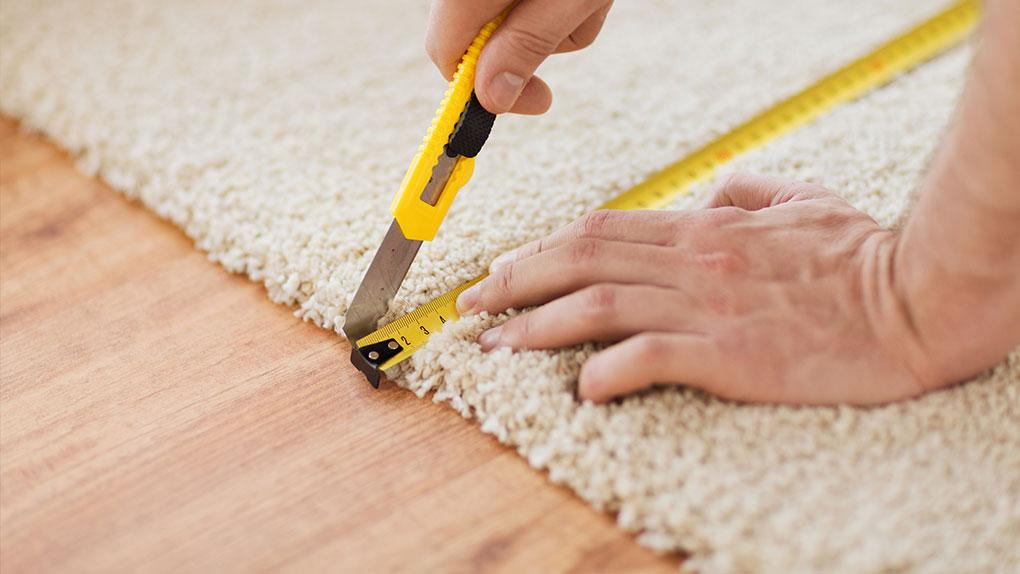
Moisture Barrier Installation
Where required, moisture barriers should be installed continuously and smoothly.
Proper moisture protection extends carpet lifespan and prevents future flooring issues.
Carpet Direction and Pattern Matching
One of the most important aspects of professional carpet installation is maintaining consistent pile direction.
For patterned carpets, installers must carefully align designs across seams to create a seamless visual effect.
Poor pattern matching can negatively impact the overall appearance of the space.
Floor Outlet Considerations
Commercial projects often require floor outlets for power and data access.
Specialized concealed carpet floor boxes should be used to maintain a clean and professional appearance.
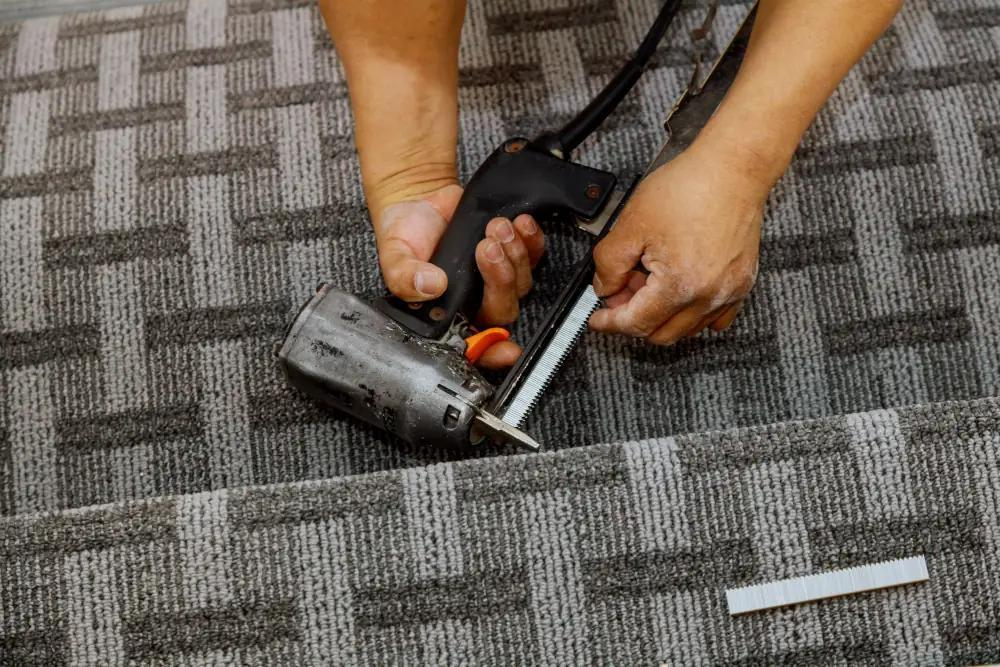
Carpet Installation Procedures
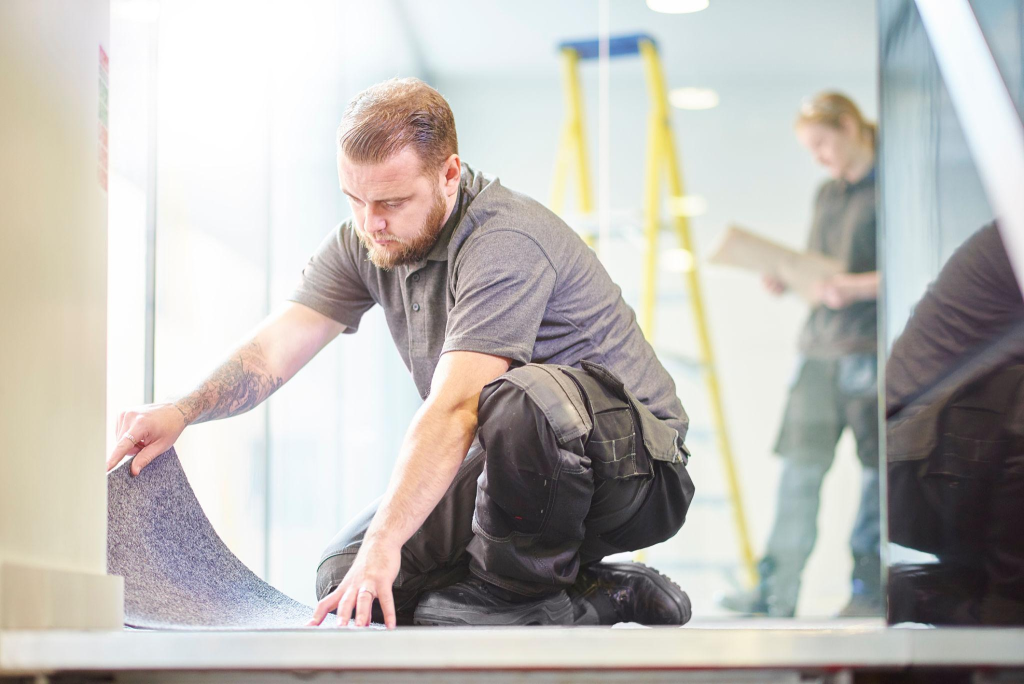
Carpet Cutting
Carpet sections should be cut according to actual site dimensions.
Each section is usually cut approximately 20 mm larger than the room size to allow for stretching and trimming during installation.
Installers must also consider carpet grain and pile direction during cutting.
Tack Strip Installation
For stretch-in carpet installations, tack strips (gripper rods) are fixed around the room perimeter approximately 10–20 mm from the wall.
Additional metal transition strips are often installed at doorways to protect carpet edges and prevent lifting.
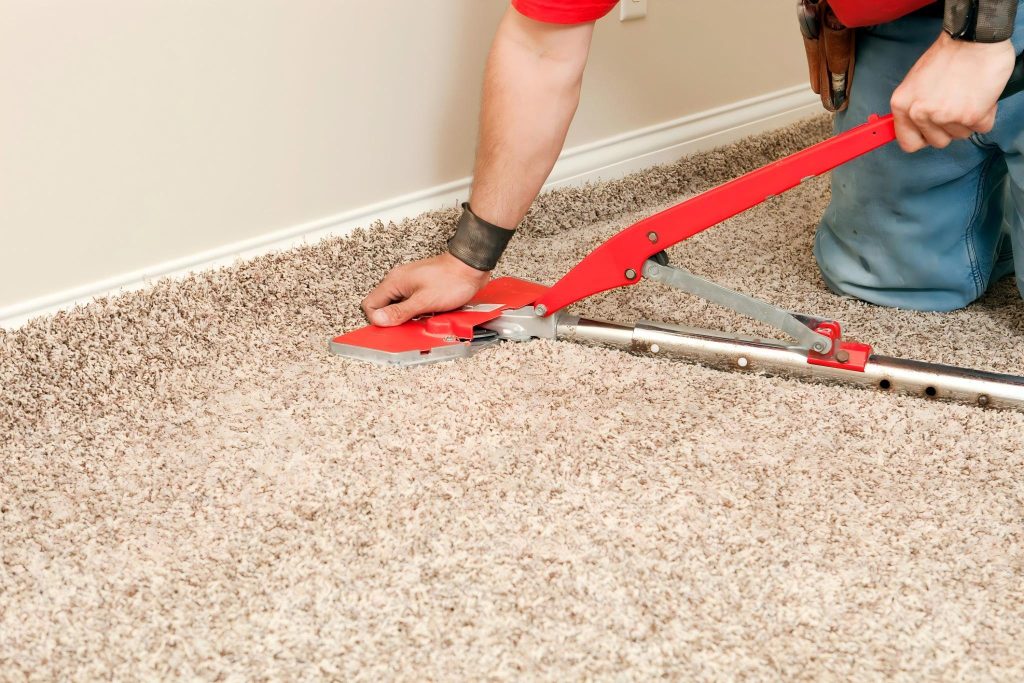
Carpet Stretching
Carpet stretching is essential for achieving a smooth and wrinkle-free finish.
Professional carpet stretchers are used to tension the carpet from the center toward walls and columns.
This process prevents future buckling and ensures long-term dimensional stability.
Seam Joining
Where multiple carpet sections meet, seams should be carefully joined and reinforced.
Proper seam construction ensures:
- Minimal seam visibility
- Smooth transitions
- Improved durability
- Consistent appearance
After installation, heavy rollers are used to remove trapped air and improve carpet adhesion.
Edge Trimming and Finishing
Once installation is complete, excess carpet is trimmed and neatly tucked beneath skirting boards or transition profiles.
A final vacuum cleaning removes dust, fibers, and installation debris.
Carpet Installation Quality Inspection Standards
After installation, the carpet should meet the following quality standards:
Surface Appearance
The carpet surface should be:
- Clean and smooth
- Free from wrinkles
- Free from bubbles
- Free from edge lifting
- Free from visible damage
Seam Quality
All seams should:
- Be tightly joined
- Match patterns accurately
- Remain visually unobtrusive
- Maintain a consistent surface level
Pile Direction Consistency
The carpet pile should run in the same direction throughout the installation area to ensure uniform color and appearance.
Secure Fixing
For tack strip installations:
- Carpet edges must be securely fixed.
- Tack strips should not be visible.
For glue-down installations:
- Adhesive bonding must be strong.
- No adhesive residue should appear on the carpet surface.
Stair Carpet Installation
For staircases, each carpet section should be firmly secured to ensure safety and durability under frequent foot traffic.
Why Professional Carpet Installation Matters
Professional carpet installation not only improves aesthetics but also maximizes the lifespan of your flooring investment.
Benefits include:
- Enhanced durability
- Better appearance
- Improved safety
- Reduced maintenance costs
- Longer service life
- Greater customer satisfaction
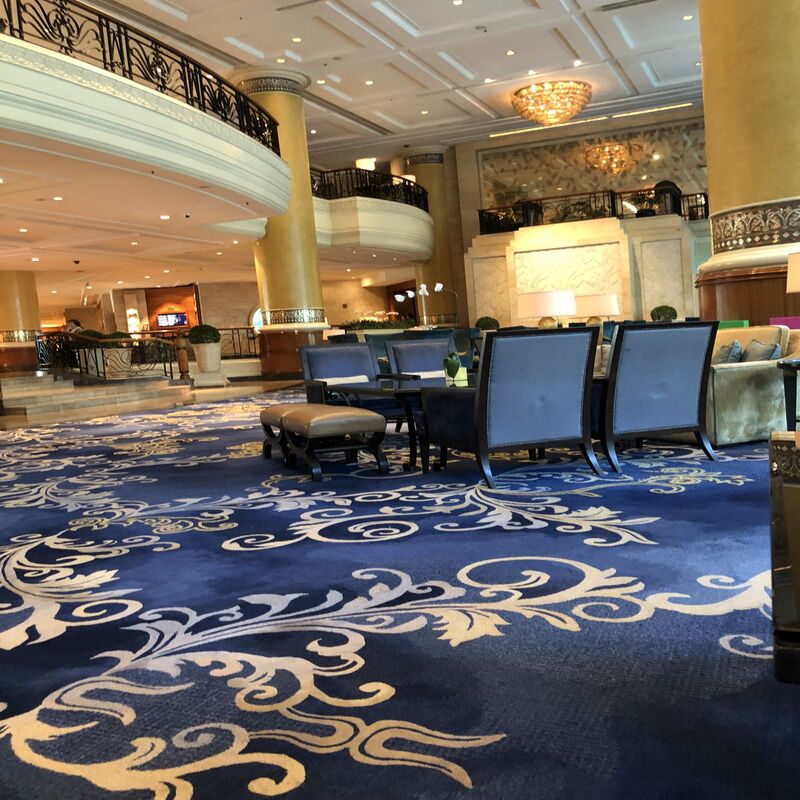
For hotels, offices, luxury clubs, conference centers, and commercial projects, proper installation is a critical part of achieving a premium interior environment.
Conclusion
High-quality carpet deserves high-quality installation. From subfloor preparation and accurate measurements to stretching, seam joining, and final inspection, every step contributes to the long-term performance of the carpet.
By following professional carpet installation requirements and industry best practices, property owners can ensure beautiful, durable, and reliable flooring for years to come.
Working with an experienced carpet manufacturer and installation team is the best way to achieve outstanding results in any commercial or hospitality project.