
Nylon vs Polyester Carpet: How to Choose the Right Material for Your Project
When sourcing carpets for commercial or residential applications, nylon and polyester are two of the most widely used synthetic fibers. Although they may look similar, their molecular structure and performance characteristics differ significantly. Understanding these differences will help you choose the most suitable carpet for your market and project needs.
1. Nylon vs Polyester: Performance Comparison
Nylon Carpet (High-Performance Option)
Nylon carpets are known for their superior durability and resilience, making them a preferred choice for demanding environments.
Key Advantages:
- Excellent elastic recovery, maintaining shape under heavy foot traffic
- Outstanding wear resistance, ideal for long-term use
- Superior color clarity and richness, suitable for high-end designs
Limitations:
- More likely to absorb stains if not properly treated
- Higher cost compared to polyester
- Slightly weaker resistance to certain chemicals
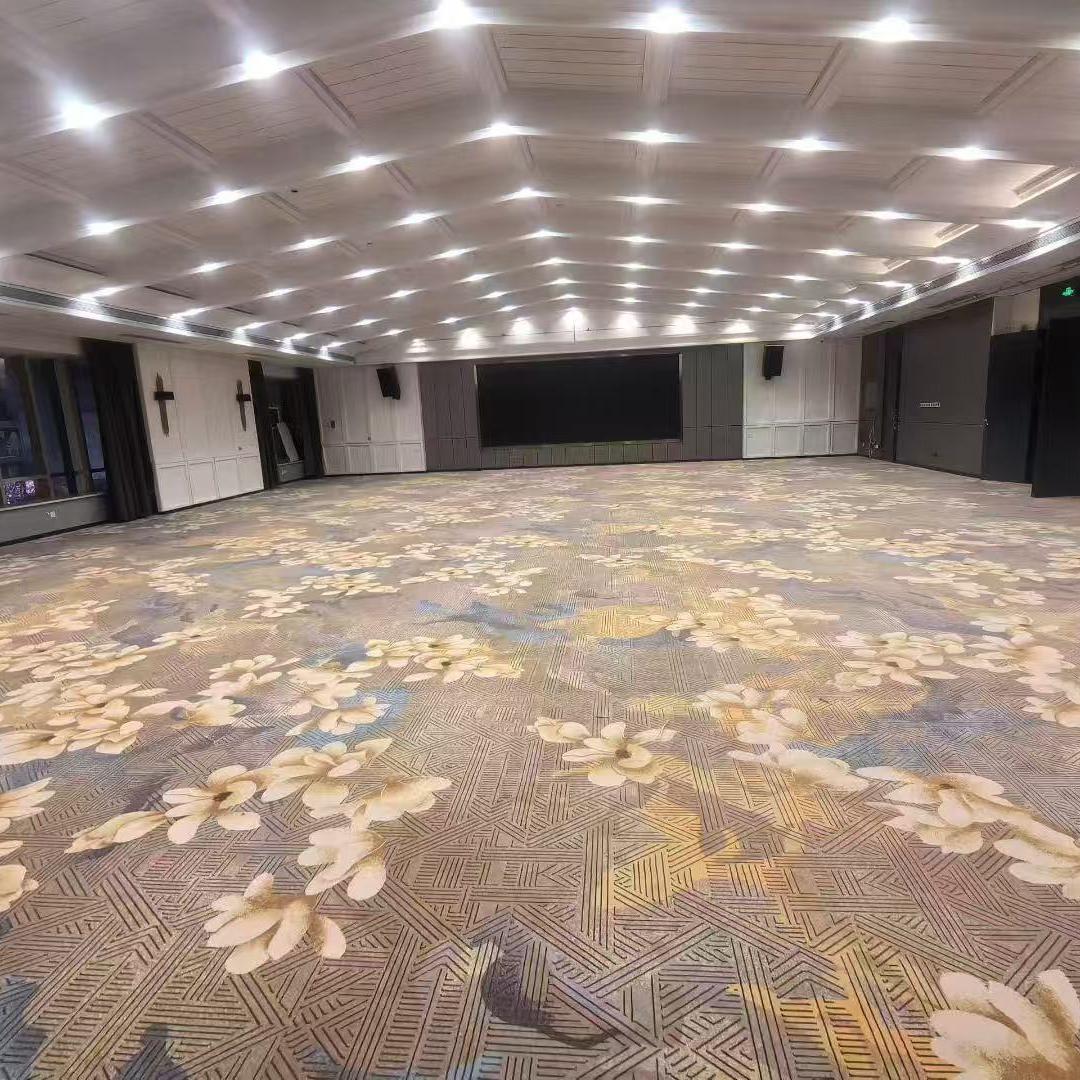
Polyester Carpet (Cost-Effective & Easy Maintenance Option)
Polyester carpets are widely appreciated for their affordability and practical performance.
Key Advantages:
- Strong stain resistance, making cleaning easier
- Good color stability and resistance to fading
- Low moisture absorption, suitable for humid environments
- More budget-friendly for large-scale projects
Limitations:
- Lower resilience, may show footprints or flatten over time
- Not ideal for very high-traffic areas
2. Application Scenarios
Choosing between nylon and polyester largely depends on the intended use:
- High-traffic areas (airports, hotels, office buildings):
Nylon is the best option due to its durability and ability to retain appearance over time. - Luxury or high-end decorative spaces:
Nylon is preferred for its vibrant color performance and premium texture. - Residential or light commercial spaces:
Polyester or blended carpets offer a balance of affordability, stain resistance, and easy maintenance. - Humid or semi-outdoor environments:
Polyester performs better thanks to its low moisture absorption and resistance to mildew.
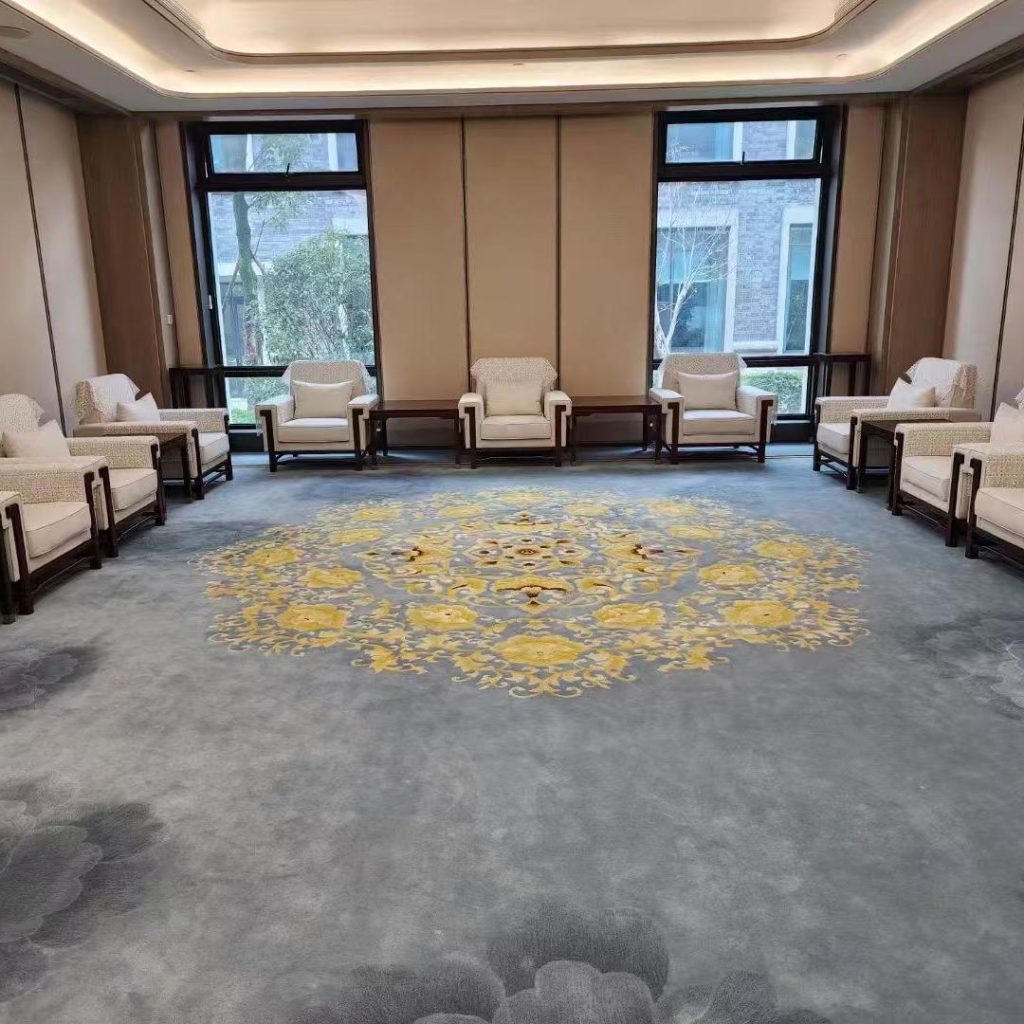
3. Fire Safety Performance
Both nylon and polyester carpets can meet B1 fire rating standards, making them suitable for most commercial and public space requirements when properly manufactured.
4. Roll Carpet Installation Guide
For wall-to-wall (broadloom) carpet projects, proper installation is critical to ensure performance and longevity.
Installation Process
- Fix Tack Strips
Install tack strips approximately 10 mm away from the walls around the room perimeter. - Lay Underlay
Place a cushioning layer (such as foam underlay) to improve comfort and moisture resistance, then trim to fit. - Cut the Carpet
Measure accurately and cut the carpet according to room dimensions. - Position & Install
Lay the carpet, adjust alignment, trim edges, and complete seam joining.
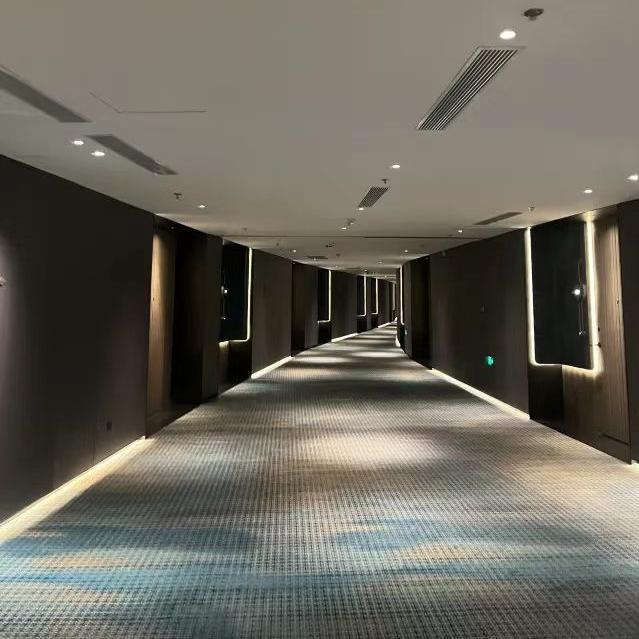
Key Installation Tips
- Use tack strips, metal transition strips, double-sided tape, or adhesives according to project requirements
- Ensure the carpet is properly stretched to avoid wrinkles or movement
- Secure edges at doorways with metal strips or adhesive systems
- Tuck carpet edges neatly under skirting boards or into tack strips
- Ensure strong bonding when using adhesives or tapes
5. Final Recommendation
There is no one-size-fits-all solution when it comes to carpet materials:
- Choose nylon carpets for maximum durability, resilience, and premium appearance
- Choose polyester carpets for cost efficiency, stain resistance, and easy maintenance
Both materials offer reliable performance when matched with the right application and proper installation.
Conclusion
For global buyers, contractors, and project developers, selecting the right carpet material is essential to balancing performance, budget, and design goals. By understanding the differences between nylon and polyester carpets, you can confidently choose products that meet your project requirements and deliver long-term value.
Working with an experienced carpet supplier ensures not only product quality but also professional guidance—from material selection to installation support—helping you succeed in competitive markets.