
How to Identify High-Quality Handmade Carpets: A Complete Buyer’s Guide
Handmade carpets are often seen as timeless investments—some even become family heirlooms passed down through generations. This is why the global antique rug market continues to thrive. But what truly defines a high-quality handmade carpet, and how can buyers distinguish superior craftsmanship from average products?
In this guide, we break down the key factors—quality, design, and materials—to help you make informed purchasing decisions.
1. Knot Density: The Core Indicator of Quality
The quality of a handmade carpet largely depends on how it is constructed. Each piece is woven on a loom using warp and weft threads, with artisans tying thousands—or even millions—of individual knots by hand.
What is KPSI?
A critical measurement in the carpet industry is KPSI (Knots Per Square Inch), which indicates how many knots are tied within one square inch (2.54 × 2.54 cm).
- Higher KPSI = Higher density = Better quality
- High-density carpets offer finer details, smoother surfaces, and greater durability
For example:
- A silk carpet may reach 300+ KPSI, delivering extremely intricate patterns
- A wool carpet may range around 80–150 KPSI, offering durability with moderate detail
This difference also explains why silk carpets are generally more expensive than wool carpets.
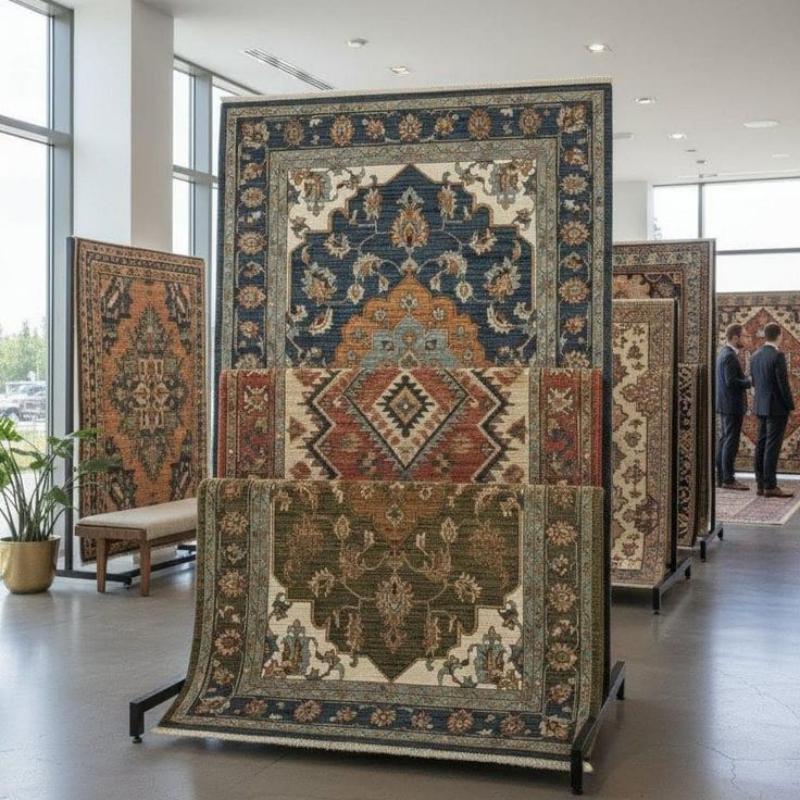
Understanding “Line Count” (Chinese Standard)
In China, handmade carpets are sometimes measured by “line count,” referring to the number of warp threads per foot. While this reflects craftsmanship, it is less precise than KPSI because it does not account for weft density.
Despite this, Chinese handmade carpets—especially silk rugs—are globally recognized for their high density and superior craftsmanship.
2. Design & KPSI: Why Density Matters for Patterns
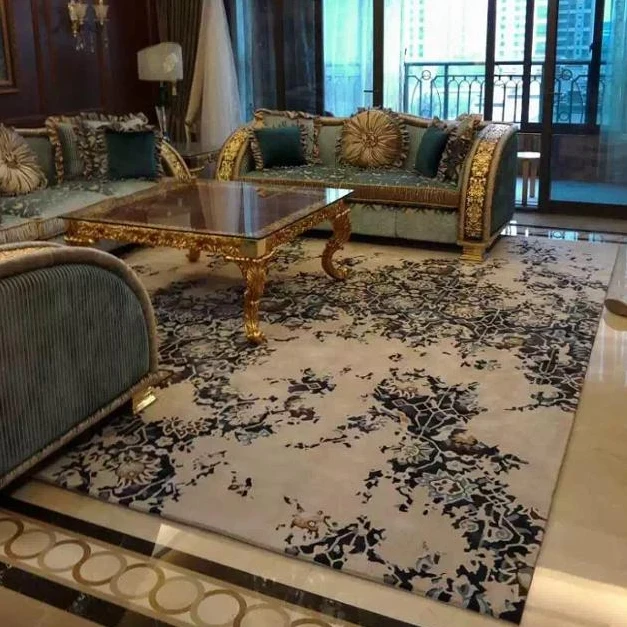
Knot density directly influences the complexity of a carpet’s design.
- High KPSI carpets:
- Suitable for intricate floral patterns, curves, and shading
- Offer refined artistic expression and detailed visuals
- Lower KPSI carpets:
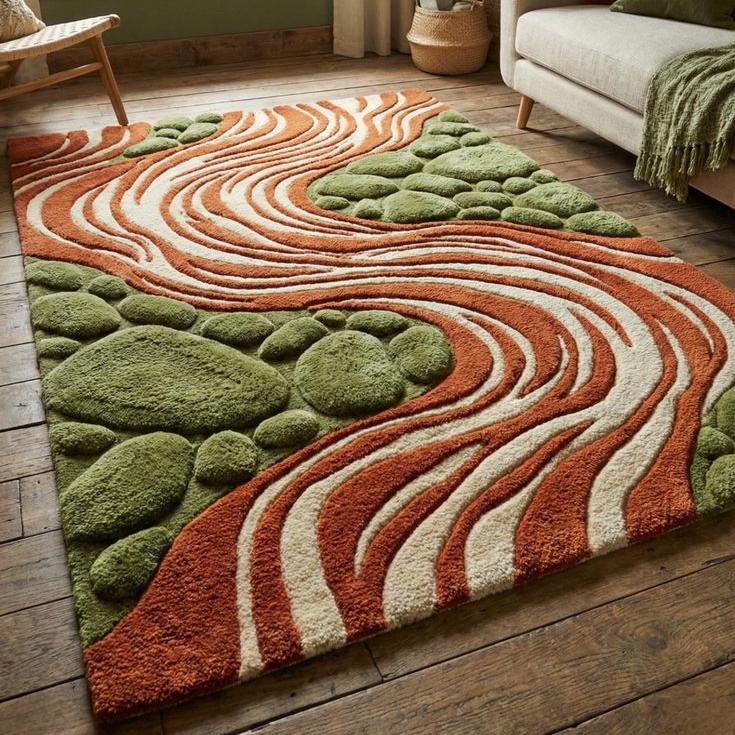
- Better for geometric or modern designs
- Simpler patterns with clean lines
Are Plain Handmade Carpets Common?
While solid-color handmade carpets can be produced, they are relatively rare. This is because:
- Handmade production is time-intensive
- Complex craftsmanship deserves detailed design
- Simple designs may not justify the labor cost
In most cases, handmade carpets are created to showcase artistry, not minimalism—unless there is strong market demand.
3. Material Matters: The Foundation of Value
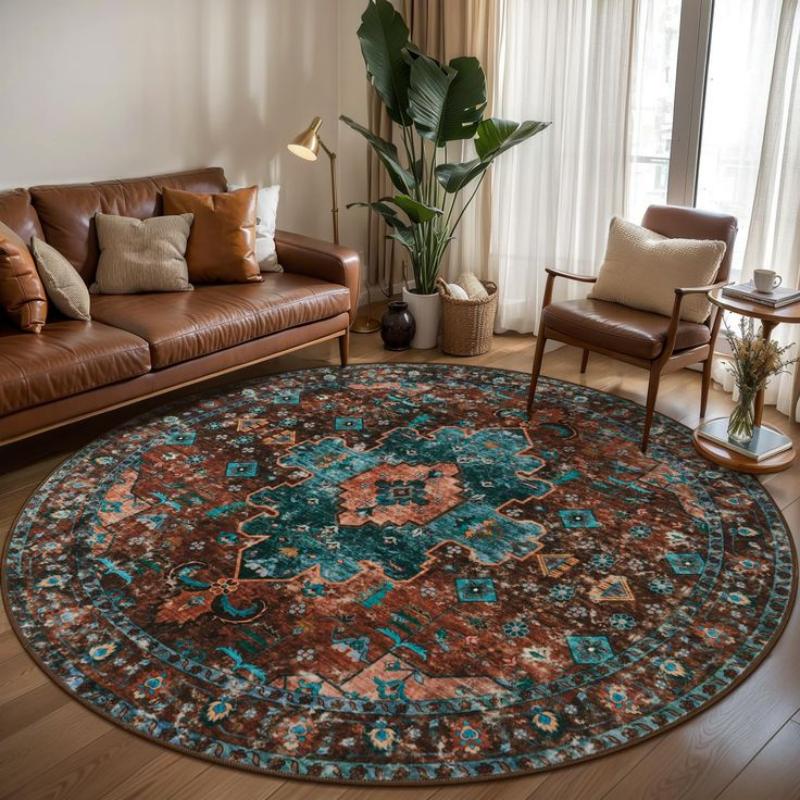
Another critical factor in evaluating handmade carpets is the material used.
Premium Materials
- Silk:
- Finest quality, ultra-soft texture, high gloss
- Best for luxury interiors and decorative purposes
- Wool:
- Durable, resilient, and comfortable
- Ideal for both residential and commercial use
- Wool & Silk Blends:
- Combine durability with visual elegance
- Offer a balance between cost and performance
Lower-grade materials may reduce cost but cannot match the quality, feel, or longevity of natural fibers.
4. Key Takeaways for Buyers
When evaluating a handmade carpet, always consider:
- Knot density (KPSI) for quality and durability
- Design complexity based on density and craftsmanship
- Material selection for comfort, appearance, and lifespan
It is important to note that high price does not always guarantee high quality. A truly valuable carpet must balance all three factors.
5. Why Choosing the Right Supplier Matters
For most buyers, analyzing every technical detail can be overwhelming. The most practical approach is to work with a reliable and experienced carpet supplier who can provide:
- Verified material sourcing
- Transparent production standards
- Professional recommendations based on your needs
This ensures you receive a carpet that not only looks beautiful but also delivers long-term value.
Conclusion
A high-quality handmade carpet is more than just a decorative piece—it is a combination of craftsmanship, artistry, and premium materials. By understanding knot density, design logic, and material quality, you can confidently select carpets that stand the test of time.
Whether for luxury interiors or investment purposes, choosing the right handmade carpet—and the right supplier—will make all the difference.