
Hotel Carpet Installation Process: A Complete Guide for Durable and Professional Flooring
Carpet is one of the most widely used flooring materials in hotels, providing comfort, elegance, sound insulation, and a luxurious atmosphere. From guest rooms and corridors to conference halls and ballrooms, a professionally installed carpet not only enhances the guest experience but also extends the flooring’s service life.
However, achieving a flawless finish requires much more than selecting a high-quality carpet. Proper installation techniques play a crucial role in ensuring durability, safety, and long-term performance.
In this guide, we’ll walk through the complete hotel carpet installation process and explain the best practices used by professional flooring contractors.
Why Proper Hotel Carpet Installation Matters
Hotels experience constant foot traffic, luggage movement, housekeeping operations, and furniture relocation. Poor installation can quickly lead to wrinkles, loose edges, visible seams, and premature wear.
Professional carpet installation offers several advantages:
- Improves overall appearance
- Extends carpet lifespan
- Reduces maintenance costs
- Enhances guest comfort
- Minimizes trip hazards
- Improves sound insulation
For hospitality projects, installation quality is just as important as carpet quality.
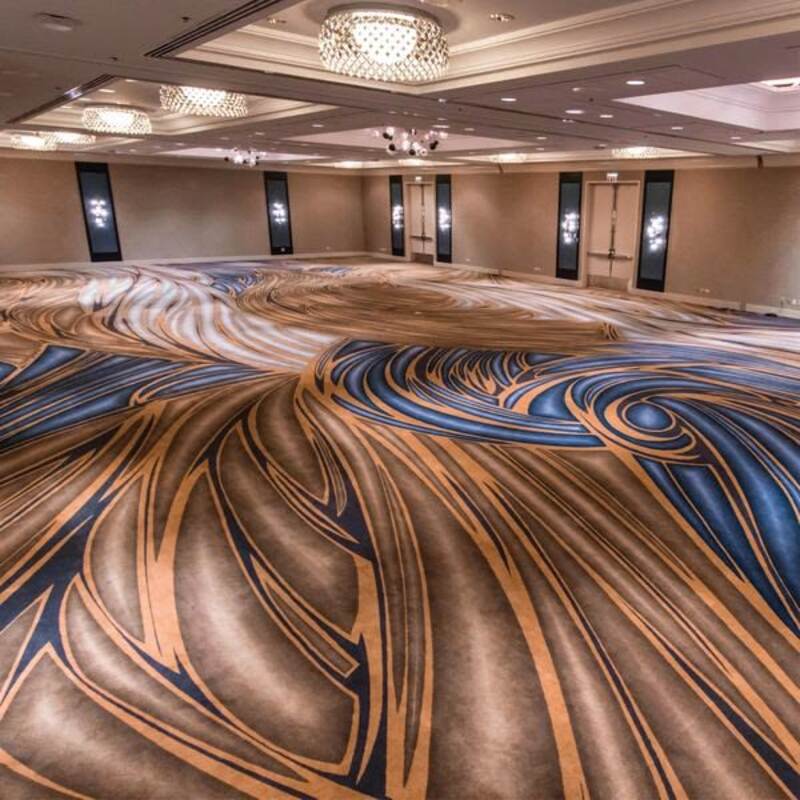
Step 1: Prepare the Subfloor
A smooth and stable subfloor is the foundation of every successful carpet installation.
Suitable subfloors include:
- Concrete floors
- Wooden floors
- Raised access floors
- Other stable commercial substrates
Before installation, ensure the surface is:
- Clean and dust-free
- Flat and level
- Free from grease or oil stains
- Structurally sound
- Dry, with a moisture content below 8%
If oil contamination exists, cleaning with appropriate solvents is recommended before installation begins.
Step 2: Layout Planning and Marking
Accurate planning prevents installation errors and material waste.
Professional installers carefully follow architectural drawings to mark:
- Room centerlines
- Layout directions
- Pattern alignment
- Carpet seams
- Transition areas
For patterned hotel carpets, precise positioning is essential to ensure visual continuity throughout corridors and public areas.
Step 3: Carpet Measuring and Cutting
Each room should be measured individually before cutting.
Professional installers typically:
- Record every room size
- Label carpet sections by room number
- Allow approximately 20 mm of extra material for stretching
- Trim factory edges before installation
Large hotel lobbies or banquet halls often require on-site cutting and seam matching to achieve the best appearance.
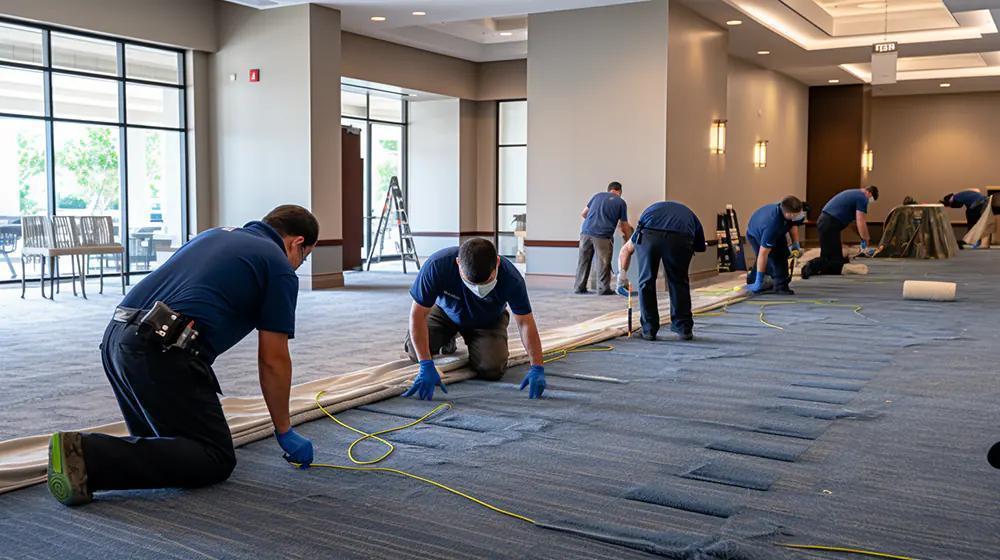
Step 4: Install Tack Strips
Stretch-in installations require tack strips around the perimeter of the room.
Installation guidelines include:
- Install tack strips approximately 8–10 mm from skirting boards.
- Fix strips using concrete nails or appropriate fasteners.
- Maintain approximately 400 mm spacing between fixing points.
Proper tack strip installation allows the carpet to remain securely tensioned for years.
Step 5: Install Carpet Underlay
Carpet underlay significantly improves comfort and durability.
The underlay is installed approximately 10 mm away from the tack strips using spot adhesive.
Benefits include:
- Better walking comfort
- Improved thermal insulation
- Reduced impact noise
- Increased carpet lifespan
- Enhanced resilience under heavy traffic
Luxury hotels often specify premium underlay systems to maximize guest comfort.
Step 6: Install the Carpet
Carpet Seaming
After positioning the carpet sections, installers carefully join adjacent pieces.
Professional seam installation includes:
- Accurate edge alignment
- Reinforced seam tape
- Adhesive bonding
- Fiber blending to minimize seam visibility
Well-executed seams should be virtually invisible after installation.
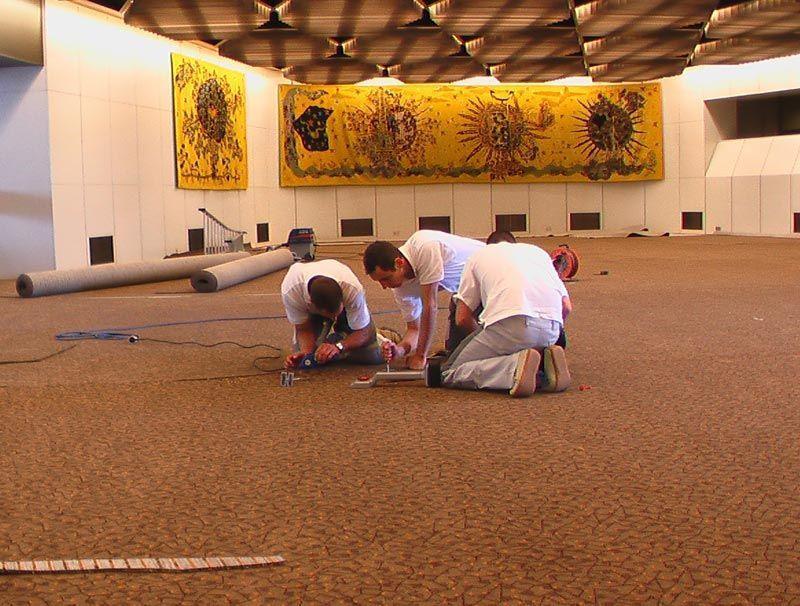
Carpet Stretching and Fixing
Proper stretching is essential to prevent wrinkles and bubbling.
The installation process involves:
- Securing one side of the carpet to the tack strips
- Using a power stretcher or knee kicker to tension the carpet
- Stretching gradually across the room
- Trimming excess material
- Tucking edges neatly beneath the skirting board
If wrinkles remain, the carpet should be re-stretched until the surface is perfectly smooth.
Glue-Down Installation
Many commercial hotels prefer glue-down installation, especially in corridors and public spaces.
This method generally includes:
- Applying adhesive evenly to the subfloor
- Installing reinforcement fabric beneath seams
- Positioning the carpet carefully
- Rolling the carpet to eliminate air pockets
Glue-down installation may be:
- Full spread adhesive (recommended for high-traffic public areas)
- Partial adhesive (commonly used in hotel guestrooms and residential projects)
Choosing the right installation method depends on the traffic level and functional requirements of each space.
Step 7: Detail Finishing
Attention to detail determines the final quality of the installation.
Installers should carefully finish:
- Door thresholds
- Skirting boards
- Stair edges
- Elevator entrances
- Transition strips
- Column bases
- Pipe penetrations
All exposed edges should be securely fixed with no visible gaps or loose fibers.
Step 8: Final Cleaning and Inspection
After installation is complete:
- Install finishing trims.
- Vacuum the entire carpet thoroughly.
- Remove loose fibers.
- Inspect seams and edges.
- Verify carpet tension.
- Ensure the surface is flat and wrinkle-free.
A comprehensive quality inspection ensures the flooring meets hospitality standards before the hotel opens or the area is returned to service.
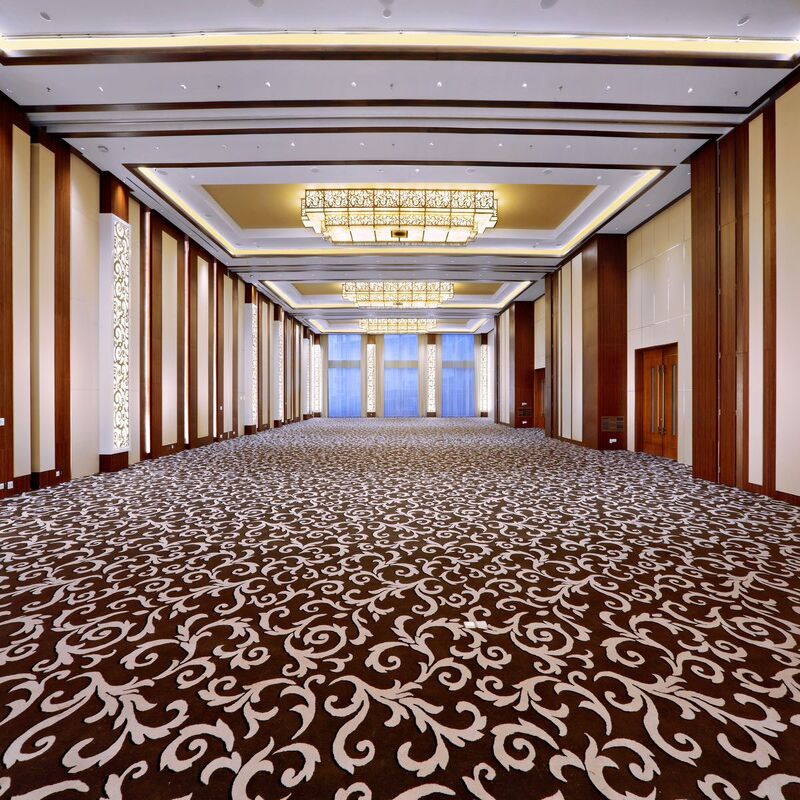
Best Practices for Hotel Carpet Installation
For long-lasting performance, professional installers should always:
- Measure every room accurately before cutting.
- Maintain consistent carpet pattern direction.
- Use high-quality adhesives and underlay.
- Minimize visible seams.
- Stretch the carpet properly.
- Protect newly installed carpet until adhesive has fully cured.
These practices help reduce maintenance issues and preserve the carpet’s appearance in high-traffic hospitality environments.
Conclusion
Hotel carpet installation is a highly specialized process that combines technical expertise, precision, and quality craftsmanship. From subfloor preparation and layout planning to stretching, seaming, and final finishing, every step contributes to the overall durability and appearance of the flooring.
Whether you are furnishing a luxury hotel, boutique resort, conference center, or serviced apartment, investing in professional carpet installation ensures superior comfort, long-lasting performance, and an elegant guest experience.
Choosing premium commercial carpets together with experienced installation professionals is the key to creating beautiful hospitality interiors that stand the test of time.