Choosing the right carpet involves more than selecting a color or pattern. For offices, hotels, meeting rooms, and exhibition halls, the ideal commercial carpet should balance durability, safety, comfort, appearance, and maintenance costs.
This guide explains how to choose the right carpet material, construction, and style for your project.
1. Understand the Benefits of Commercial Carpet
Commercial carpet offers several advantages:
- Sound absorption: Helps reduce footsteps, chair movement, and echoes.
- Safety: Provides a softer walking surface and can improve traction when properly selected and installed.
- Design flexibility: Offers a wide range of colors, textures, and custom patterns.
- Comfort: Creates a warmer, softer surface than many hard flooring materials.
2. Choose the Right Carpet Material
Nylon Carpet
Nylon is a popular choice for high-traffic commercial areas because of its durability, resilience, and stain-resistant options. It is suitable for offices, hotel corridors, and busy lobbies.
Polyester (PET) Carpet
Polyester offers vibrant colors and excellent design flexibility, making it suitable for printed carpets in meeting rooms, exhibition spaces, and hotel guest rooms. Performance depends on the specific construction and traffic level.
Polypropylene (PP) Carpet
Polypropylene is lightweight, moisture-resistant, and generally economical. However, some constructions have lower resilience under heavy pressure, making careful product selection important for busy areas.
Wool and Wool-Blend Carpet
Wool provides a naturally soft texture, refined appearance, and sound-absorbing properties. It is well suited to executive lounges, VIP rooms, and premium hospitality interiors, although it usually requires a higher budget and appropriate maintenance.
3. Select the Right Carpet Type
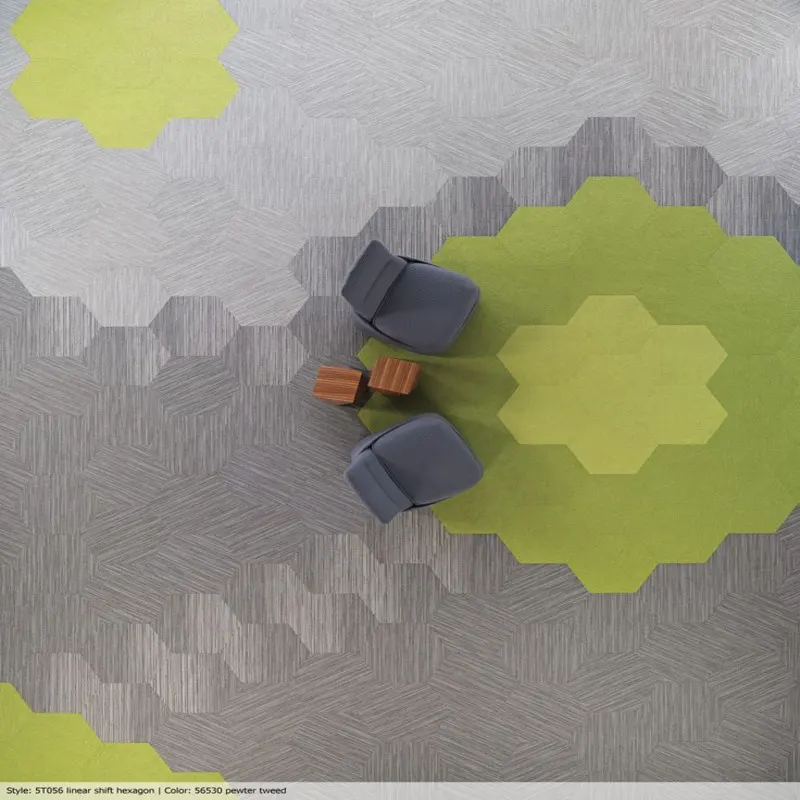
Carpet tiles: Modular tiles, commonly available in 500 × 500 mm sizes, are easy to install and maintain. Individual tiles can be replaced when damaged, making them ideal for modern offices.
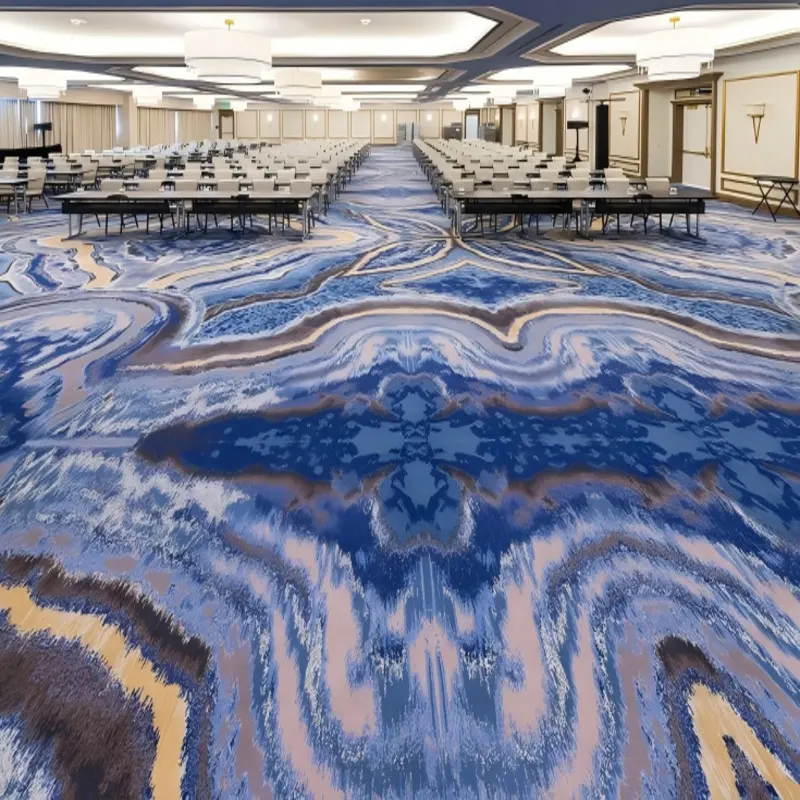
Broadloom carpet: Available in tufted, Wilton, Axminster, and printed constructions, broadloom carpet creates a continuous appearance for hotel rooms, corridors, meeting rooms, and halls.
Custom printed carpet: Digital printing allows logos, artwork, and bespoke patterns to be reproduced, helping businesses create distinctive branded environments.
4. Check Key Technical Specifications
Before purchasing, evaluate these important factors:
- Pile weight and height: Select a construction suited to foot traffic. Short-pile or loop-pile carpets are often practical for commercial areas.
- Fire performance: Confirm compliance with the fire-safety standards applicable to your building and location.
- Backing material: PVC, bitumen, and PU backings offer different properties. Choose according to subfloor conditions and installation needs.
- Colorfastness: Printed carpets should resist fading from light, friction, and routine cleaning.
5. Consider Installation and Maintenance
A durable carpet can still perform poorly if installed incorrectly. Ensure the subfloor is clean, dry, and level. Align carpet tiles carefully and finish broadloom seams and edges securely.
Regular vacuuming, prompt stain removal, and periodic professional cleaning help maintain appearance and extend service life.
6. Match Carpet to Your Project
- Busy offices: Nylon carpet tiles.
- Hotel rooms and meeting rooms: Nylon or polyester broadloom.
- Exhibition halls and branded spaces: Custom printed carpet.
- Temporary or budget-conscious projects: Suitable polypropylene carpet.
- Premium lounges and VIP areas: Wool or wool-blend carpet.
Find the Right Carpet for Your Project
Liaoning Taiyi Carpet Co., Ltd. supplies commercial carpet solutions with factory-direct options, custom designs, sample services, and coordinated quotation and delivery support.
Contact our team to discuss your project requirements and find a carpet that balances appearance, performance, and budget.