
How to Choose the Best Carpet for Hotels: A Complete Material & Buying Guide
Hotel carpets do much more than decorate interior spaces. They improve acoustic comfort, enhance guest experiences, provide thermal insulation, and reinforce a hotel’s overall brand image. From luxury lobbies and guest room corridors to conference halls and banquet venues, selecting the right commercial carpet is a critical investment that directly impacts both aesthetics and long-term operating costs.
With so many carpet materials available—including wool, silk, nylon, polyester, polypropylene, and blended fibers—how do hotel owners and designers choose the most suitable option?
This guide explains the key carpet materials, compares their performance, and provides practical recommendations for selecting carpets that meet the demands of modern hospitality projects.
Why Hotels Choose Carpet Flooring
Unlike hard flooring materials such as tile or stone, carpets provide multiple functional advantages for hospitality environments.
Excellent Noise Reduction
Hotels experience constant foot traffic, luggage movement, and guest activity throughout the day. Carpet absorbs impact sound and reduces echo, creating a quieter and more relaxing atmosphere for guests.
Enhanced Guest Comfort
Soft flooring provides a warmer, more comfortable walking surface, especially in guest rooms and suites. A quality carpet also adds a sense of luxury that guests immediately notice.
Improved Interior Design
Modern hotel carpets are available in countless colors, textures, and custom patterns, allowing designers to create distinctive spaces that reflect the hotel’s identity.
Better Safety
Carpet provides greater slip resistance than many hard flooring materials while also cushioning accidental falls, making it a practical choice for public areas.
What Carpet Materials Are Commonly Used in Hotels?
Although carpets are manufactured from many different fibers, most commercial hotels primarily use synthetic fibers or wool blends because they offer the best balance between durability, maintenance, and cost.
The most common materials include:
- Nylon 66
- Nylon 6
- Polyester
- Polypropylene (Olefin)
- Acrylic
- Wool
- Wool-Nylon blends
Each material has its own strengths depending on the application.
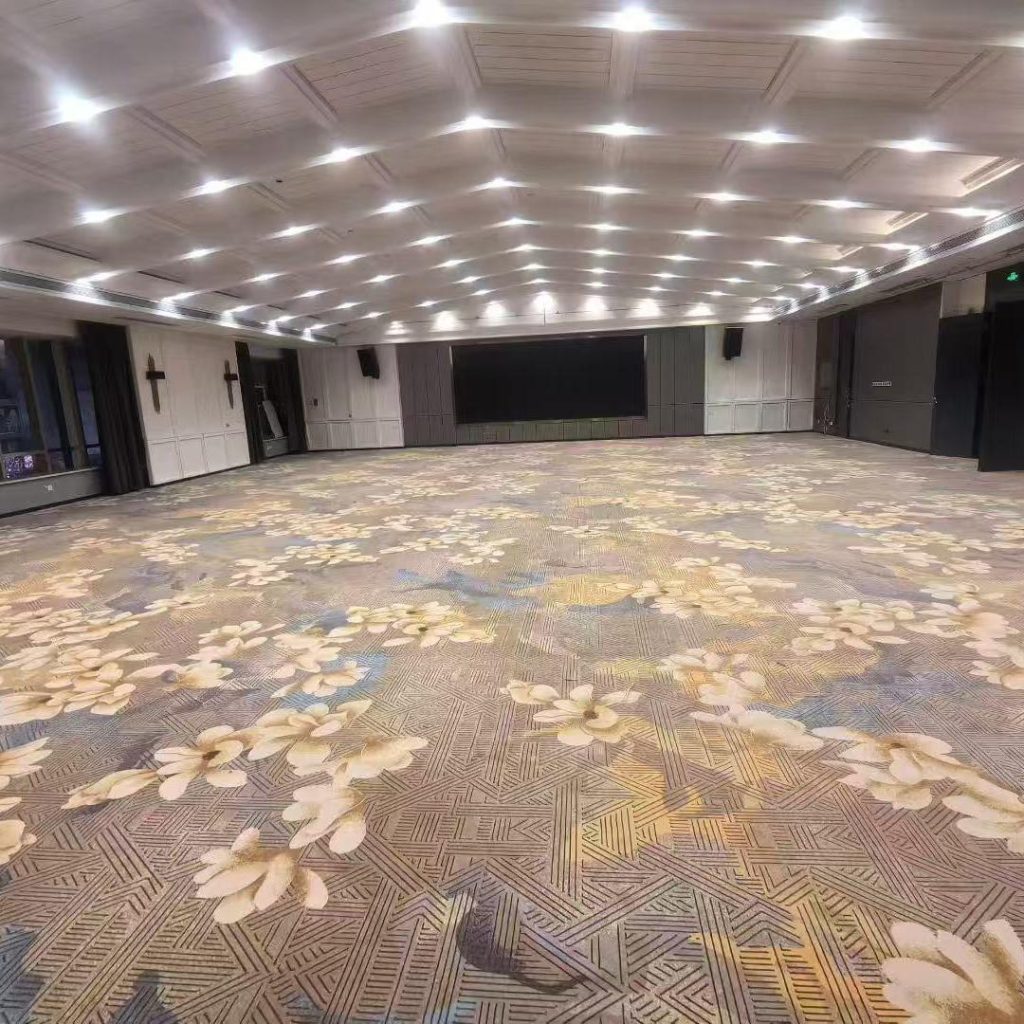
Comparing Popular Hotel Carpet Materials
Nylon 66 – Premium Commercial Performance
Nylon 66 is widely regarded as the highest-performing synthetic carpet fiber for hospitality projects.
Key advantages include:
- Outstanding abrasion resistance
- Excellent resilience
- Superior stain resistance
- Strong flame performance
- Excellent color retention
- Long service life
Although Nylon 66 has a higher initial cost, its durability often results in a lower lifetime ownership cost, making it a preferred choice for luxury hotels and high-traffic public areas.
Nylon 6 – Reliable and Cost-Effective
Nylon 6 offers many of the same benefits as Nylon 66 while being more affordable.
It provides:
- Good durability
- Good resilience
- Easy cleaning
- Reliable stain resistance
Many mid-range hotels choose Nylon 6 for guest rooms and corridors because it delivers excellent value.
Polyester – Excellent Value for Budget Hotels
Polyester carpet has become increasingly popular due to its attractive appearance and competitive pricing.
Advantages include:
- Affordable pricing
- Good wear resistance
- Moisture resistance
- Excellent color clarity
- Easy maintenance
Although polyester has slightly lower resilience than nylon, it performs well in moderate-traffic hotel environments and offers one of the best price-to-performance ratios.
Wool Carpet – Luxury and Natural Beauty
Natural wool carpets remain a premium option for luxury interiors.
Benefits include:
- Exceptional softness
- Elegant appearance
- Natural insulation
- High comfort
- Excellent flame resistance
However, wool requires more maintenance, absorbs moisture more easily, and comes at a significantly higher price than synthetic fibers.
For this reason, most hotels reserve wool carpets for executive suites, VIP lounges, or feature areas rather than installing them throughout the property.
Wool-Nylon Blends
Many luxury hotels choose wool-nylon blends, commonly:
- 80% Wool + 20% Nylon
- 50% Wool + 50% Nylon
These combinations deliver the warmth and elegance of natural wool while improving durability and wear resistance.
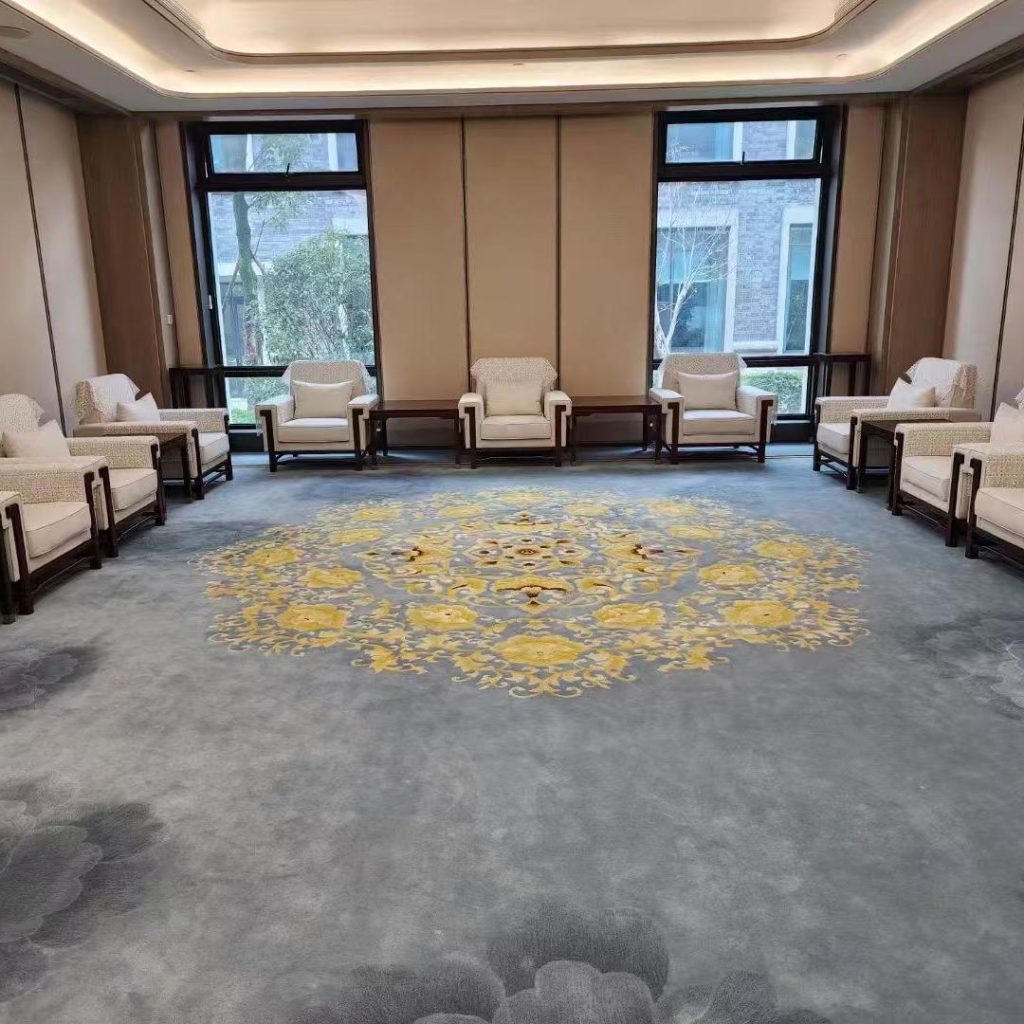
Which Carpet Material Is Best for Hotels?
For most hospitality projects, the choice depends on budget and expected traffic levels.
Luxury Hotels
Recommended materials:
- Nylon 66
- Wool-Nylon Blend
- Axminster woven carpets
These materials provide exceptional durability while maintaining a luxurious appearance.
Mid-Scale Hotels
Recommended materials:
- Nylon 6
- High-quality Polyester
These options balance performance, aesthetics, and installation costs.
Budget Hotels
Recommended materials:
- Polyester
- Polypropylene (for selected applications)
These materials reduce initial investment while still providing acceptable durability.
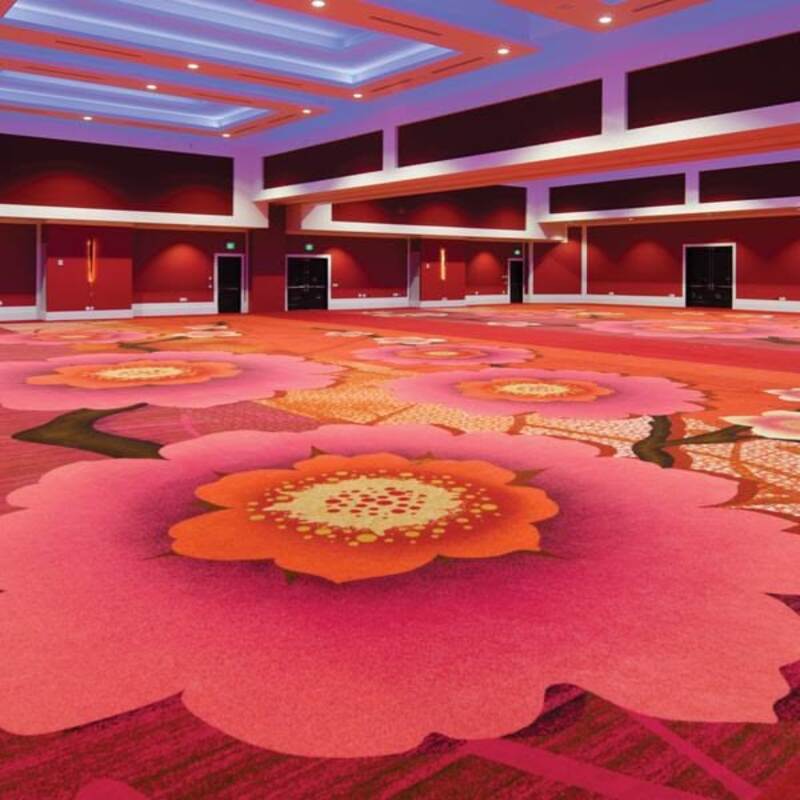
Practical Tips for Hotel Carpet Selection
Choosing the right material is only part of the decision. Proper specifications also improve guest comfort and carpet lifespan.
1. Select the Right Carpet Weight
Different hotel areas require different pile weights.
General recommendations include:
- Corridors: approximately 1200 g/m²
- Guest rooms: approximately 800 g/m²
Heavier carpets generally perform better in high-traffic areas.
2. Use High-Quality Carpet Underlay
Installing underlay with a thickness of 12 mm or greater improves:
- Walking comfort
- Sound insulation
- Carpet lifespan
- Impact resistance
This is particularly beneficial in premium hotels where guest comfort is a priority.
3. Choose Colors Based on Function
Carpet color influences both mood and maintenance.
- Light colors create a relaxed atmosphere and work well in guest rooms, lounges, and leisure spaces.
- Dark colors convey professionalism and elegance, making them ideal for conference rooms, meeting spaces, and executive areas.
Pattern selection is largely a design preference, although custom patterns can reinforce hotel branding and hide signs of daily wear.
Final Thoughts
Selecting the right hotel carpet requires balancing aesthetics, durability, guest comfort, maintenance requirements, and budget.
For luxury hospitality projects, Nylon 66 and wool-blend carpets provide the highest levels of performance and appearance retention. For hotels with tighter budgets, polyester offers an excellent combination of affordability, durability, and moisture resistance, making it one of the most practical choices for large-scale installations.
By choosing the appropriate carpet material, pile weight, underlay, and color scheme, hotel owners can create elegant, comfortable spaces that enhance guest satisfaction while reducing long-term maintenance costs.
Whether you’re furnishing a boutique hotel, business hotel, resort, or international hospitality project, investing in the right commercial carpet is a decision that delivers lasting value.