
How to Choose Carpet for Hotel Corridors: A Practical Buying Guide
Hotel corridors are among the most heavily trafficked areas in a building. Luggage carts, housekeeping trolleys, service carts, and constant guest traffic can place significant pressure on the floor every day. That is why the key requirement for hotel corridor carpet is simple: wear resistance and compression recovery.
Choosing the right carpet can help maintain a clean, professional appearance for years. Choosing the wrong one may lead to crushing, wrinkles, exposed backing, or premature replacement.
Why Use Commercial Carpet in Hotel Corridors?
1. Designed for Heavy Traffic
Professional commercial carpet provides a softer buffer between wheels, footsteps, and the floor structure. Compared with hard flooring, it can also help reduce impact noise from luggage and service carts.
2. Improved Walking Comfort
Corridors can be long, busy spaces. Carpet provides a warmer and more comfortable surface underfoot while creating a quieter atmosphere for guests.
3. Better Interior Continuity
Wall-to-wall corridor carpet can create a seamless visual effect. Coordinated patterns and colors can make a hotel corridor look more refined and reinforce the property’s interior design.
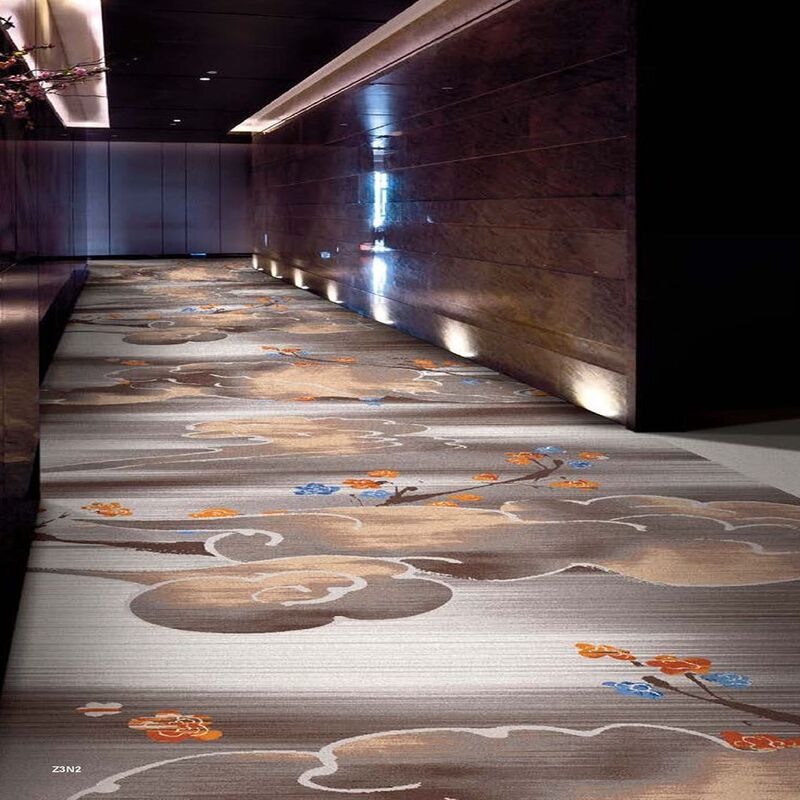
Which Carpet Material Is Best for Hotel Corridors?
Nylon Printed Carpet
For many high-traffic hotel projects, nylon carpet is a practical choice. Nylon offers strong wear resistance, good resilience, and flexible design options. Custom printed patterns can also help hotels create distinctive corridor interiors.
High-Density Tufted Carpet
When the project has a controlled budget but still requires a continuous wall-to-wall appearance, high-density tufted carpet can provide a balance between cost and performance. The carpet should be selected with the appropriate commercial backing and fire-performance specifications.
Axminster or Custom Luxury Carpet
For luxury hotels and executive floors, Axminster carpet or other premium custom carpet solutions can deliver sophisticated patterns, detailed visual effects, and a more upscale appearance. These options are particularly suitable for branded hospitality interiors where design is a major consideration.
Common Hotel Corridor Carpet Mistakes
Choosing low-density polypropylene carpet: Budget materials may not provide sufficient resilience for continuous trolley traffic and can show flattening more quickly.
Ignoring fire-performance requirements: Hotel carpet must comply with the applicable fire-safety regulations and project standards. Always request valid test documentation from the supplier.
Using very light, plain colors: Corridors experience constant foot traffic. Medium or darker tones with subtle patterns are generally easier to maintain visually and can conceal everyday marks more effectively.
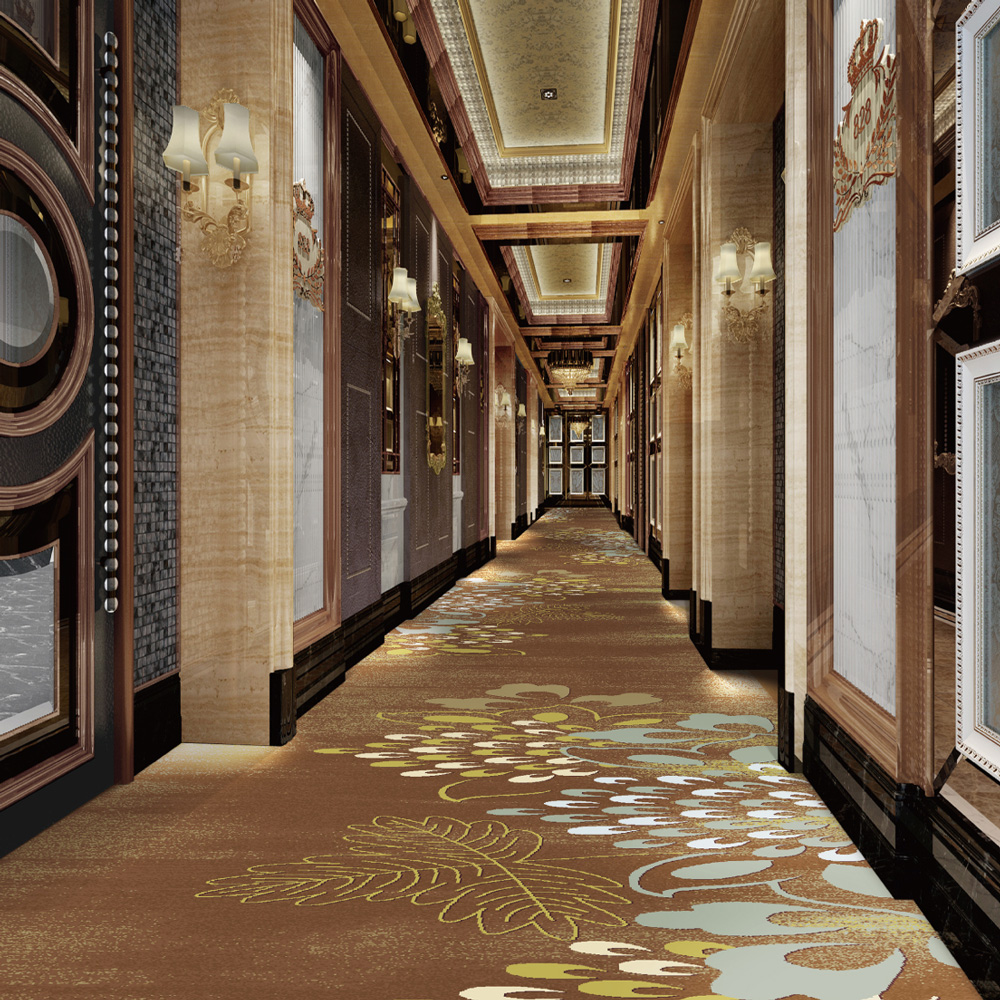
How to Buy Hotel Corridor Carpet
Do not judge commercial carpet by appearance alone. Before placing a bulk order, request a physical sample and check the pile density, pile height, backing, pattern consistency, color, compression recovery, and relevant safety documentation.
Accurate quantity planning is also important. A professional supplier can optimize roll direction, seams, pattern matching, and cutting layouts to reduce material waste.
The Right Carpet Saves More Than the Purchase Price
For hotel corridors, the cheapest carpet is rarely the best-value solution. A well-selected commercial carpet should balance durability, resilience, safety, maintenance, design, and total lifecycle cost.
Whether the project requires nylon printed carpet, high-density tufted carpet, Axminster carpet, or a custom wall-to-wall solution, selecting the specification according to actual traffic conditions is the best way to achieve long-term performance.