
Staircase Wall-to-Wall Carpet Guide: Installation Methods, Material Selection & Pro Tips
When it comes to upgrading interior spaces, staircase carpeting is often overlooked—yet it plays a crucial role in both aesthetics and functionality. A well-installed stair carpet not only enhances safety and comfort but also elevates the overall design of your space.
In this complete guide, we’ll walk you through the most practical staircase carpet installation methods, how to choose the right carpet surface, and expert tips to ensure a flawless finish—perfect for homeowners, designers, and commercial buyers alike.
1. Choosing the Right Stair Carpet Installation Method
Selecting the correct installation method is essential for durability, appearance, and long-term maintenance. Below are the most commonly used techniques in the industry:
1.1 Glue-Down Installation
Best for: Concrete or unfinished (rough) staircases
Advantages:
- Strong and durable adhesion
- Cost-effective installation
- Ideal for bulk projects and commercial spaces
Considerations:
- Adhesives may produce odor during and after installation
- Requires proper ventilation before use
- Not recommended for sensitive environments
- Difficult to remove; adhesive residue may remain on surfaces like stone, tile, or wood
👉 Pro Tip: Use low-VOC adhesives for eco-conscious projects or indoor environments with strict air quality requirements.
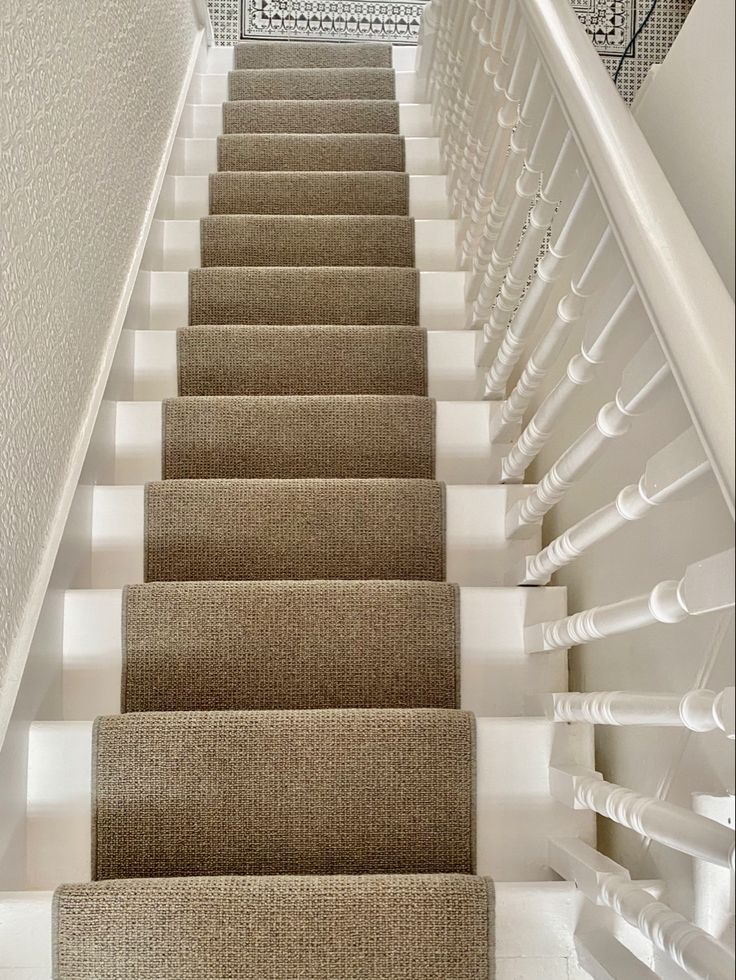
1.2 Double-Sided Tape Installation
Best for: Finished stair surfaces such as tile, marble, or hardwood
Advantages:
- Easy and fast installation
- Minimal residue, easy to clean or replace
- Suitable for temporary or semi-permanent applications
Considerations:
- Not ideal for thick or heavy carpets
- Low-quality tape may cause bubbling or loosening over time
- May require reapplication in high-traffic areas
👉 Pro Tip: Always use high-strength, construction-grade carpet tape for better durability.
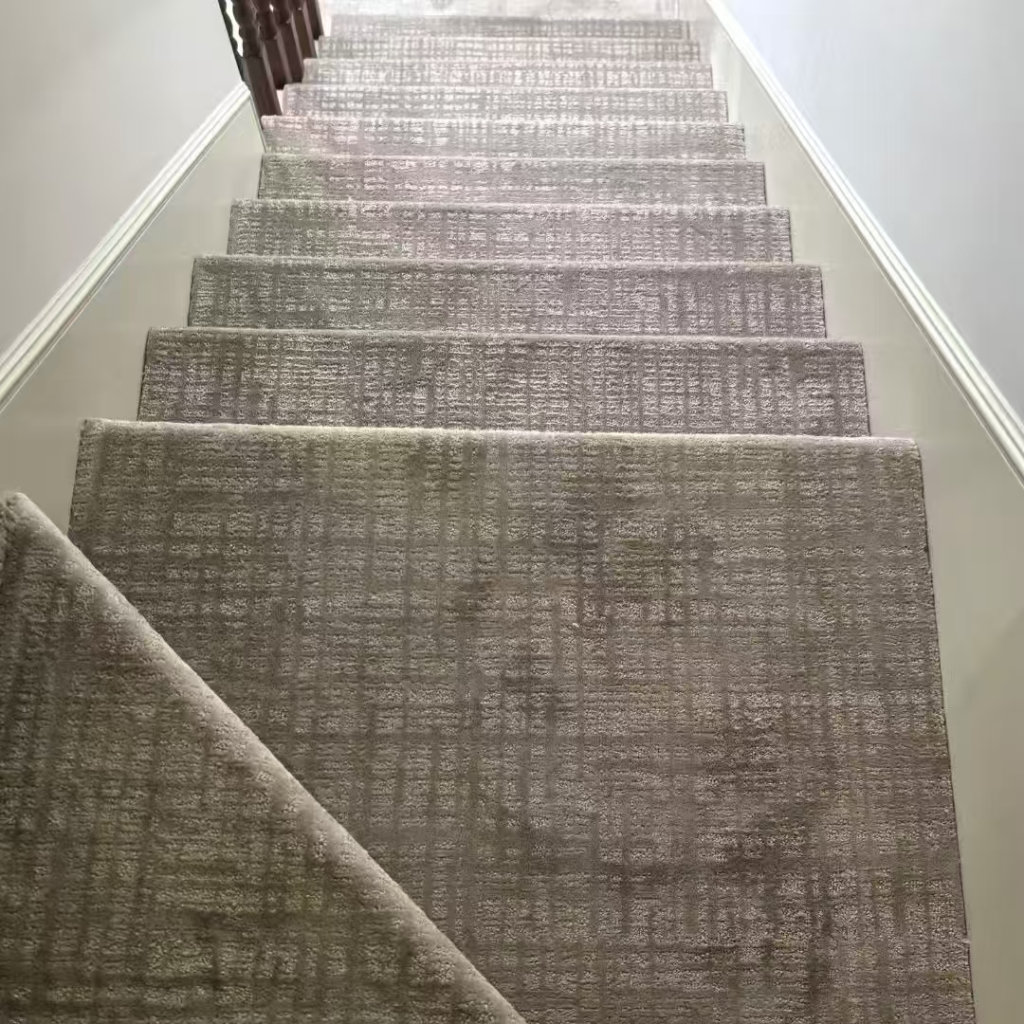
1.3 Tack Strip with Underlay Installation
Best for: Premium residential or hospitality projects
Advantages:
- Superior comfort and underfoot cushioning
- Elegant and seamless appearance
- Long-lasting and secure installation
Considerations:
- Higher installation cost
- Requires side supports or stair stringers
- Involves nailing into the subfloor (not suitable for tile or stone stairs)
👉 Pro Tip: Combine with high-density underlay to enhance acoustic performance and comfort.
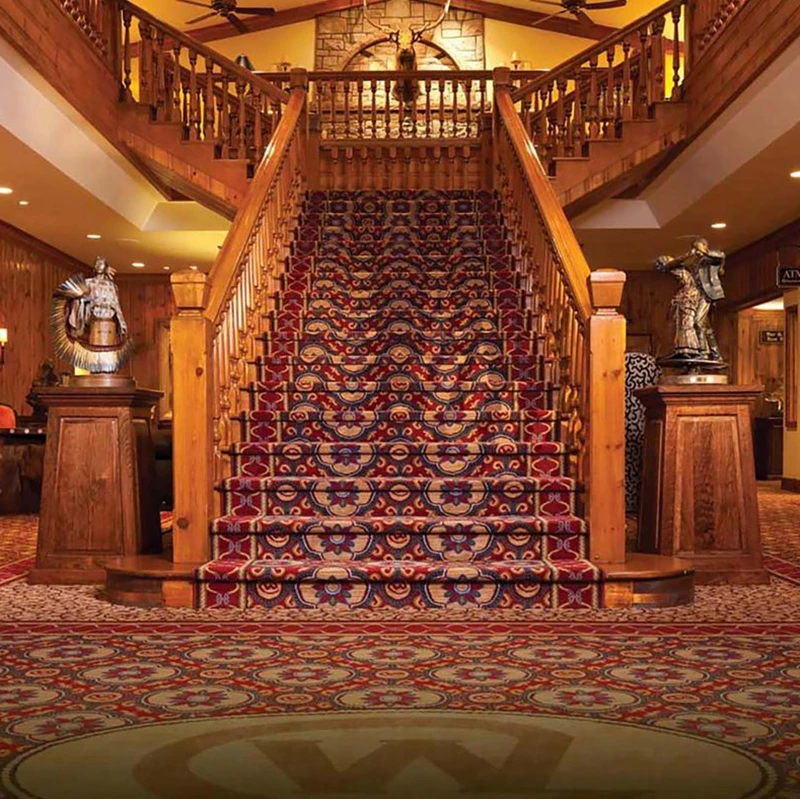
1.4 Wooden Board Base Installation (Less Common)
Best for: Unfinished staircases during early construction stages
Advantages:
- No adhesive required
- Easy carpet fixing using nails or staples
- Clean and structured installation base
Considerations:
- Additional cost for wooden board preparation
- Not suitable for already finished staircases
2. How to Choose the Right Carpet Surface for Stairs
The carpet surface (pile type) significantly affects durability, comfort, and visual appeal. The two main options are:
2.1 Cut Pile Carpet
Characteristics:
- Soft and smooth texture
- Comfortable underfoot
- Elegant and luxurious look
Best for: Residential projects, low to medium traffic areas
2.2 Loop Pile Carpet
Characteristics:
- Tighter, more structured surface
- Higher durability and wear resistance
- Rich texture and pattern variations
Best for: High-traffic areas such as hotels, offices, and commercial buildings
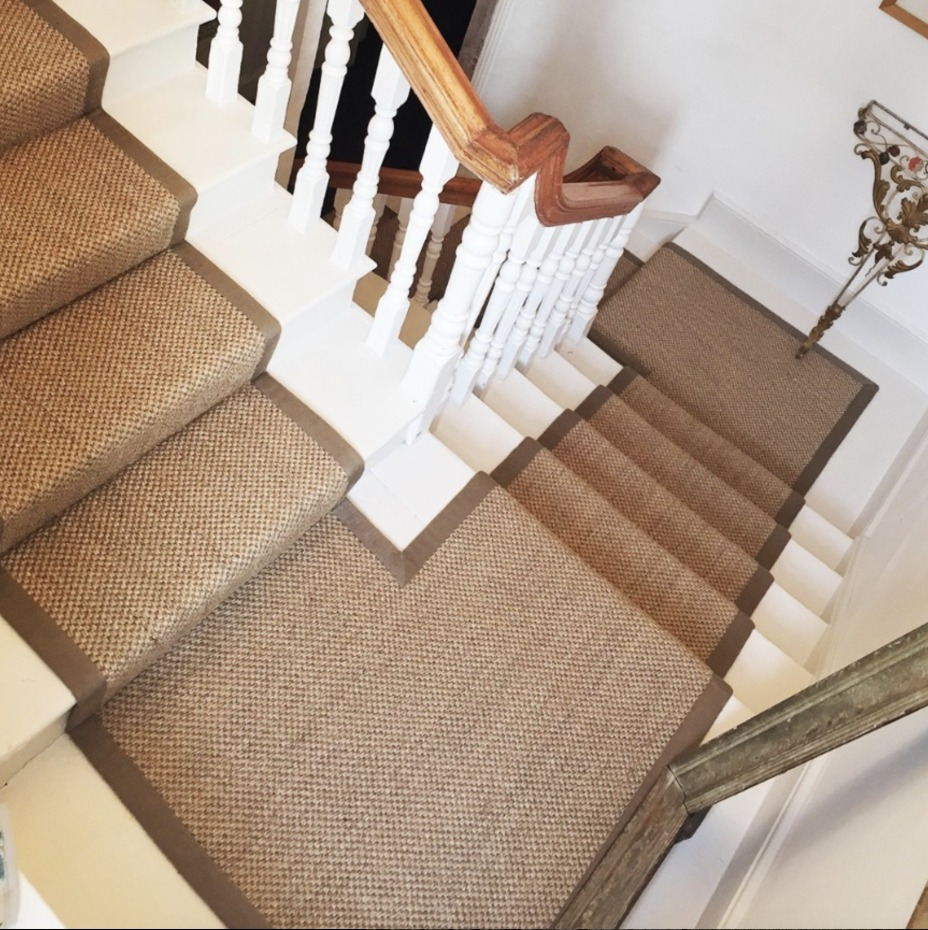
Key Design Consideration for Loop Pile Carpets
If your staircase features a 90-degree sharp edge (square stair nosing) and you choose a uniform loop pile pattern, you may encounter a common issue:
👉 The gap between loop rows may align exactly with the stair edge, exposing the backing and affecting appearance.
Solutions:
- Choose cut pile carpets to avoid this issue entirely
- Opt for loop pile designs with:
- Irregular patterns
- Multi-level loop combinations
- Diagonal or staggered arrangements
- Larger loop structures
These options effectively reduce the risk of visible gaps and improve overall visual consistency.
3. Important Measurement & Installation Tips
Maintain Consistent Carpet Direction
Always ensure that all carpet pieces are installed in the same direction. This prevents:
- Color shading differences
- Texture inconsistency under lighting
Allow Extra Material
Ordering extra carpet material is highly recommended. This helps:
- Avoid shortages during installation
- Eliminate the need for visible seams on stair treads or risers
Smart Seam Placement
In professional installations:
- Seams are typically placed in internal corners (angles)
- Avoid seams on tread surfaces, as they become more visible over time with foot traffic

4. Why Staircase Carpeting Matters for Your Business
Whether you’re sourcing for hospitality projects, residential developments, or retail distribution, staircase carpets are a high-value product category:
- Safety: Reduces slipping and noise
- Durability: Designed for high foot traffic
- Design Impact: Enhances interior aesthetics
- Customization: Wide range of materials, patterns, and backing options
At our company, we specialize in manufacturing and supplying a wide variety of staircase carpets, including:
- Printed carpets
- Hand-tufted carpets
- Sisal and natural fiber carpets
- Prayer rugs
- Wall-to-wall commercial carpeting solutions
We support OEM/ODM customization and bulk supply for global buyers.
Final Thoughts
Choosing the right staircase carpet involves more than just selecting a design—it requires careful consideration of installation methods, material structure, and long-term performance.
By following the strategies outlined above, you can ensure a professional, durable, and visually appealing staircase carpet installation that meets both functional and aesthetic goals.
If you’re looking for a reliable staircase carpet supplier or want expert recommendations for your next project, feel free to reach out—we’re here to help you find the perfect solution.