
Everything You Know About Wall-to-Wall Carpet Installation May Be Wrong
A Professional Guide to Full Carpet Installation Techniques
Carpet is a general term for soft textile floor coverings. With its soft texture, comfortable foot feel, rich colors, and elegant decorative effect, carpet has long been regarded as a high-end flooring solution. It is widely used in luxury hotels, large public buildings, office spaces, residential homes, automobiles, aircraft, and ships.
However, improper installation often leads to serious quality problems such as bubbling, wrinkling, color inconsistency, loosening, frayed edges, and visible seams.
That’s why correct wall-to-wall carpet installation techniques are far more critical than most people realize.
As a professional carpet manufacturer and project supplier, Liaoning Taiyi Carpet Co., Ltd. shares this in-depth guide to help you understand the correct construction process and key technical points of full carpet installation.
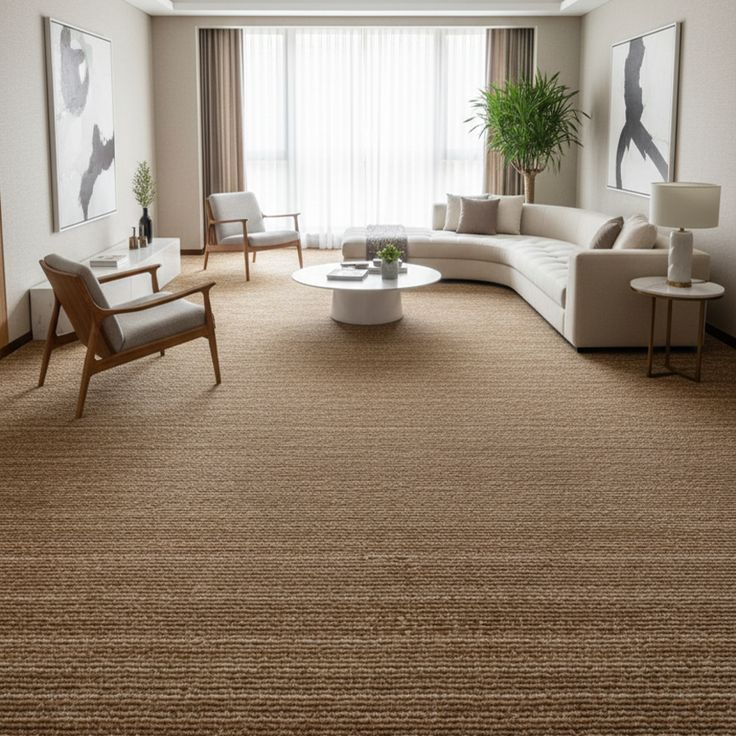
What This Guide Will Help You Understand
- Carpet classification and functions
- Wall-to-wall carpet installation process
- Key construction techniques and edge finishing methods
1. Carpet Classification by Material
1) Natural Fiber Carpets
Natural fiber carpets are made from fibers derived from plants or animals, such as cotton, wool, and silk.
They are generally divided into:
- Handwoven carpets (high cost, artistic value)
- Machine-woven carpets (more affordable)
The pile quality and pile density directly determine durability and wear resistance. Higher pile density means better performance in high-traffic areas.
2) Synthetic Fiber Carpets
Synthetic fiber carpets are made from materials such as polypropylene and acrylic fibers, produced through machine weaving and bonded with backing layers.
Key advantages:
- Wool-like appearance and touch
- Excellent elasticity and abrasion resistance
- Fire-retardant, stain-resistant, anti-static, and insect-resistant
- Ideal for commercial carpet projects
3) Blended Carpets
Blended carpets combine wool fibers with synthetic fibers.
For example, adding 20% nylon to wool can improve abrasion resistance by up to five times, making it a popular choice for offices and hotels.
4) Plastic Carpets
Plastic carpets are made from PVC resin and plasticizers, commonly used for:
- Entrance mats
- Shoe-cleaning mats
- Artificial grass
They are functional rather than decorative.
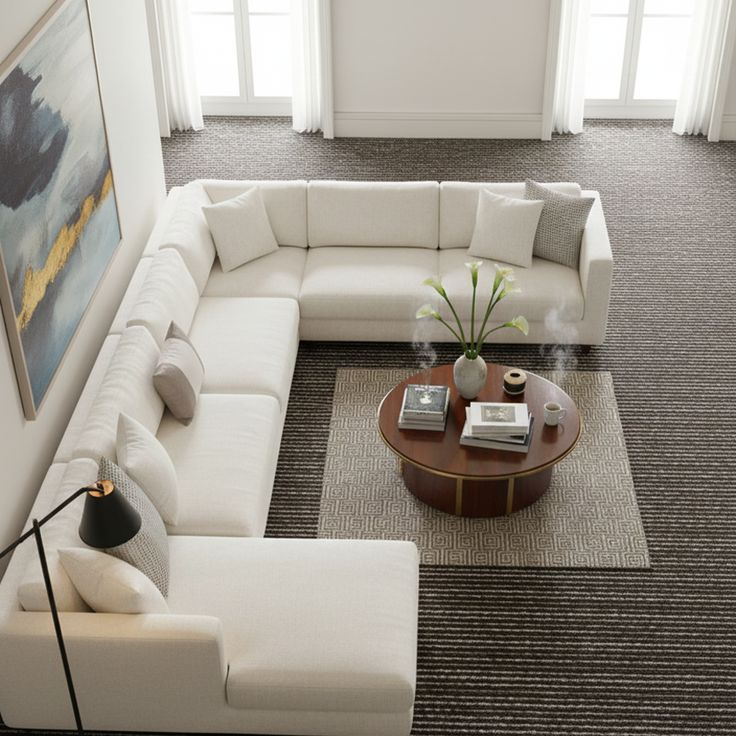
2. The Functional Value of Carpets
Sound Insulation
Carpets absorb and block sound waves due to their porous structure, providing excellent acoustic performance.
Air Quality Improvement
Carpet piles capture airborne dust particles, helping to improve indoor air quality.
Safety
As a soft flooring material, carpets reduce slipping and impact risks—especially suitable for homes with children and elderly people.
Aesthetic Enhancement
With rich patterns and colors, carpets enhance interior design and spatial elegance.
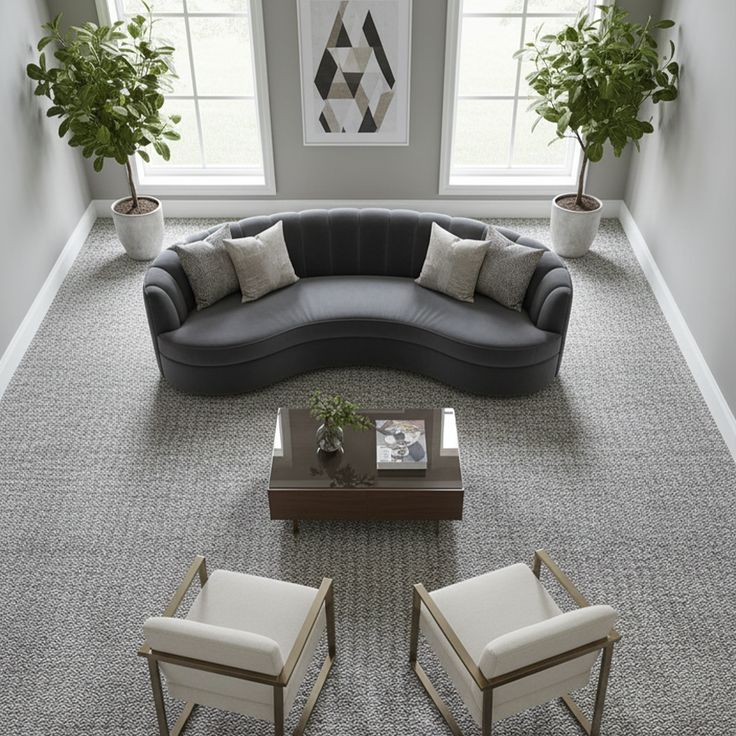
3. Wall-to-Wall Carpet Installation Process
Standard Construction Flow
Subfloor preparation → Layout marking → Carpet cutting → Gripper strip installation → Underlay installation → Carpet laying → Edge finishing → Final cleaning
Step 1: Subfloor Preparation
✔ Floor surface must be flat and dry
✔ Moisture content ≤ 9% for concrete or cement surfaces
✔ Remove debris, dust, and oil stains
✔ Level uneven areas with cement mortar
This step directly affects carpet lifespan and appearance.
Step 2: Installing Gripper Strips (Tack Strips)
✔ Install around walls and columns
✔ Nail angle faces toward the wall
✔ Leave space for edge tucking
✔ Nail spacing approx. 300 mm
For large areas, double-row gripper strips are recommended to improve carpet tension and stability.
Step 3: Carpet Cutting
✔ Cut according to actual room dimensions
✔ Length should exceed room size by 20–30 mm
✔ Trim edges cleanly for seamless joining
✔ Use “V-shaped” edge cuts for tufted carpets to improve pile blending
Step 4: Underlay Installation
✔ Place elastic underlay with textured side down
✔ Leave approx. 10 mm gap from gripper strips
✔ Tape seams to prevent shifting
For frequently movable carpets, a paper felt layer is recommended to prevent bonding with the subfloor.
Step 5: Carpet Laying & Seaming
✔ Fix one side first
✔ Stretch carpet evenly
✔ Tuck edges into gripper strip gaps
Common Edge Finishing Methods:
- Tucking under skirting boards
- Concealing edges between gripper strips and skirting
Seam Treatment:
- Butt-joining with pattern alignment
- Hot-melt seam tape + iron for strong bonding
- Overlap cutting for thin carpets to achieve invisible seams
Step 6: Edge Termination & Transitions
✔ Wall and column bases: tuck carpet edges securely
✔ Doorways and transitions: use metal or PVC edge strips
✔ Stone-to-carpet junctions require height compensation
Proper edge finishing prevents curling, lifting, and long-term damage.
Step 7: Final Trimming & Cleaning
✔ Tuck loose edges
✔ Trim protruding pile fibers
✔ Remove temporary nails
✔ Vacuum thoroughly and protect finished surfaces
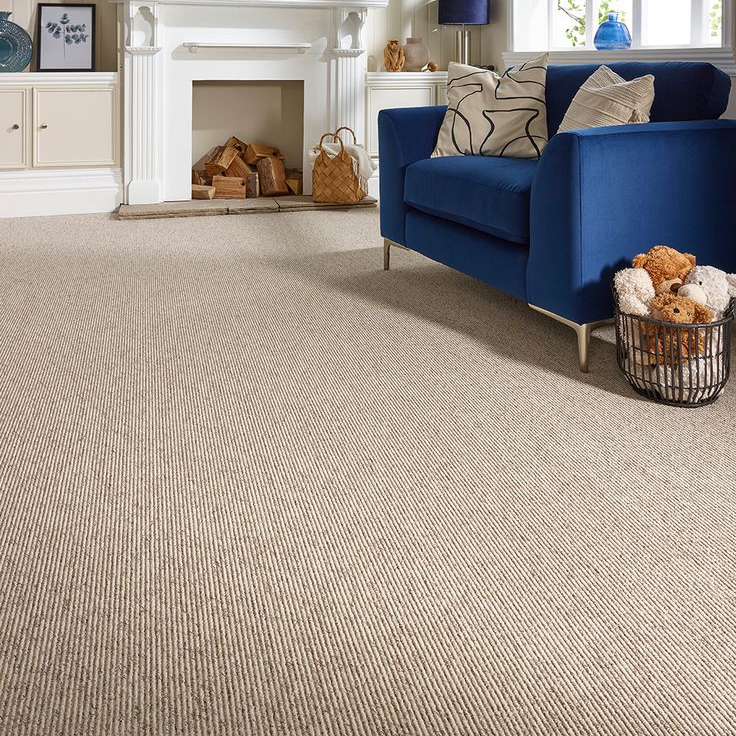
Why Professional Carpet Installation Matters
Correct wall-to-wall carpet installation ensures:
- Flat, wrinkle-free surfaces
- Long service life
- Consistent color and pattern appearance
- Reduced maintenance and repair costs
At Liaoning Taiyi Carpet, we provide not only high-quality commercial and residential carpets, but also professional installation guidance for global projects.
Choose the Right Carpet. Install It the Right Way.
Looking for a reliable wall-to-wall carpet manufacturer and project partner in China?
Contact Liaoning Taiyi Carpet for professional carpet solutions, technical support, and factory-direct pricing.
The right carpet deserves the right installation.